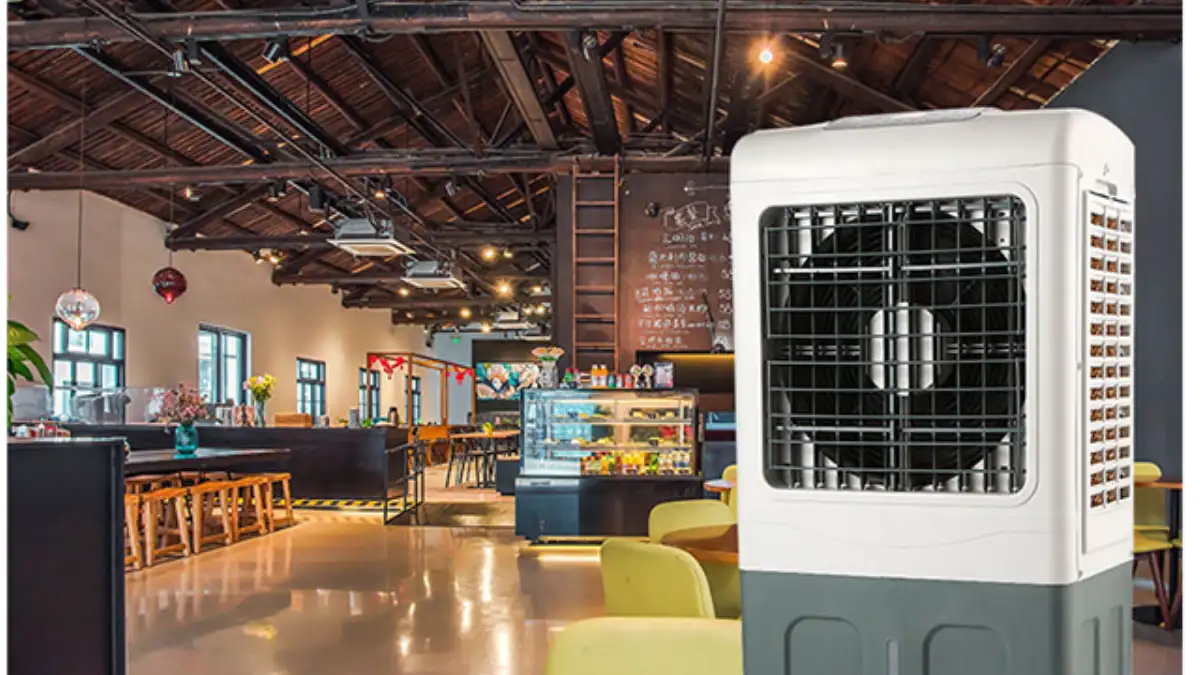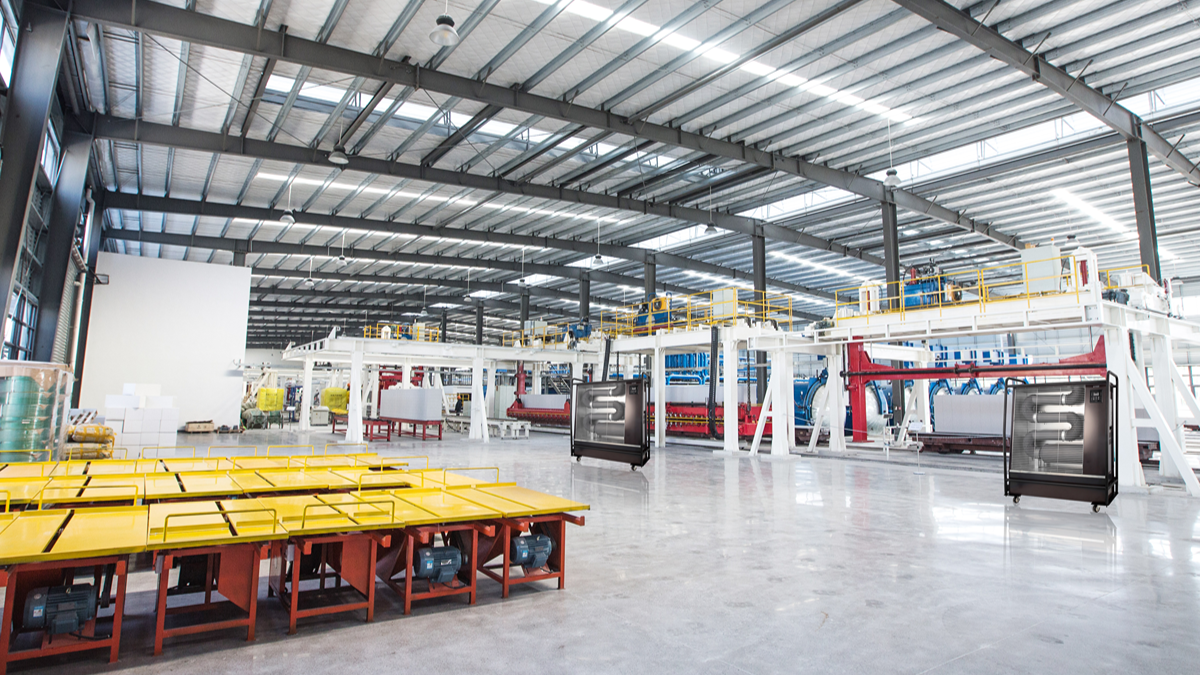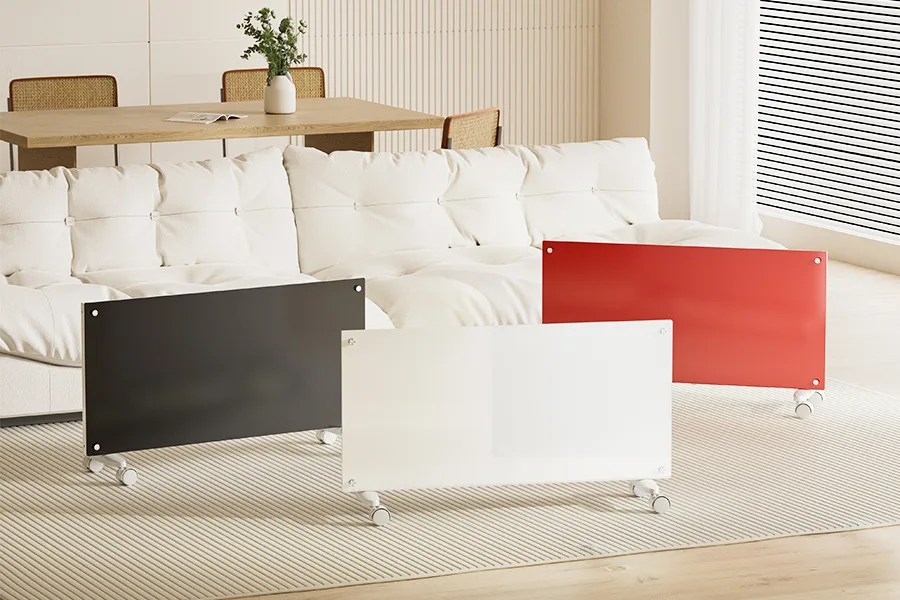
With various misting fan models available for different applications, buyers need to consider factors such as cooling performance, installation requirements, operating environments, and maintenance needs before making a purchase. This guide provides a detailed overview of how misting fans work, their main types, advantages, limitations, and suitable applications to help users and businesses evaluate the right cooling solution.
What is a Misting Fan?
A misting fan is a cooling device that combines airflow with a fine spray of water. Unlike a standard fan, which mainly circulates air to create a cooling effect, a misting fan releases fine water droplets into the airflow. As the water evaporates, it absorbs heat from the surrounding air and provides additional cooling. Misting fans are commonly used in outdoor spaces, patios, restaurants, events, workshops, warehouses, and other large or semi-open areas where traditional air conditioning may not be practical.
How Does a Misting Fan Work?
A misting fan works by combining water mist and airflow to create an evaporative cooling effect. It sprays fine water droplets into moving air, and the evaporation process removes heat from the surrounding environment, making the air feel cooler.
The core cooling process includes three main steps:
- Water Supply and Mist Generation: Water is pumped through fine nozzles, which break it into tiny droplets and create a cooling mist.
- Evaporation and Heat Absorption: The small water droplets absorb heat from the air and evaporate, reducing the surrounding temperature.
- Cool Air Distribution: The fan pushes the cooled air and mist across a wider area to provide more comfortable cooling.
Understanding the Technology Behind Evaporative Cooling
A misting fan cools the surrounding air through a simple evaporative cooling process. It uses water, pressure, and airflow together to create a cooling effect. The system sprays extremely fine water droplets into warm air. When these droplets evaporate, they absorb heat from the environment, and the fan distributes the cooler air over a wider area.
1. Water Supply and Mist Generation
The cooling process begins when water enters the misting system through a tank or external water connection. A pump increases the water pressure and pushes it through specially designed nozzles. These nozzles break the water into microscopic droplets, creating a fine mist instead of a traditional water spray.
2. Evaporation and Heat Removal
After the mist is released into the air, the tiny water droplets quickly absorb heat from the surrounding environment. The heat energy causes the water to change from liquid into vapor. During this evaporation process, heat is removed from the air, creating a cooler feeling in the surrounding area.
3. Airflow Distribution
The fan plays an important role in spreading the cooling effect. Strong airflow carries the fine mist across a larger space and helps distribute cooler air more evenly. This makes misting fans suitable for outdoor areas, commercial spaces, workshops, and other semi-open environments.
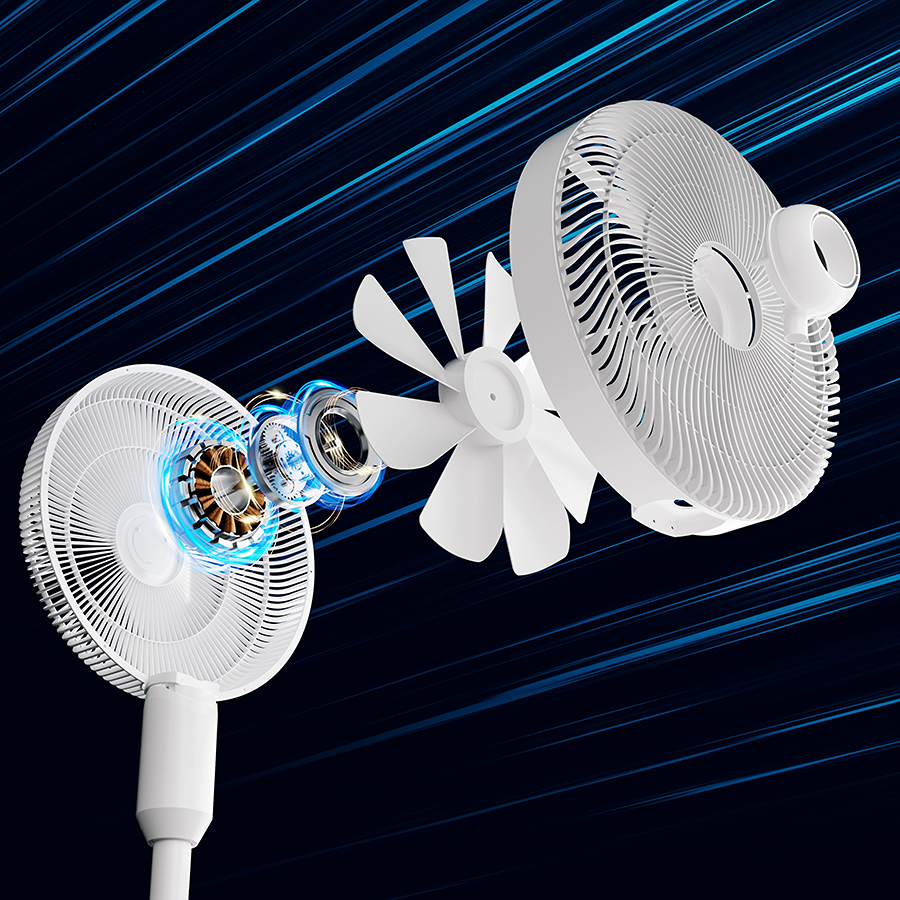
Types of Misting Fans: Know the Options Before You Buy
Portable Misting Fans
Portable misting fans are designed for flexible cooling in different locations. With wheels, compact designs, or built-in water tanks, they are easy to move between outdoor areas, events, workshops, and temporary cooling spaces.
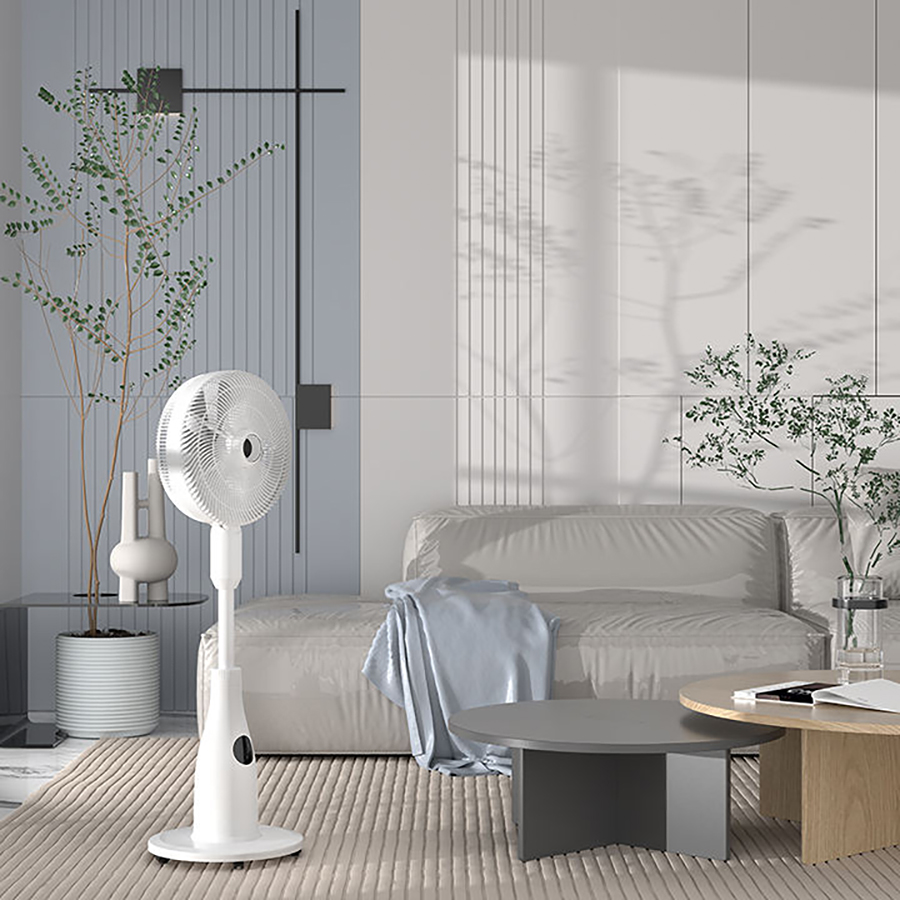
They are a practical choice for users who need convenient cooling without permanent installation. For example, Yika’s floor-standing mist fans feature adjustable speed settings and timer functions, making them suitable for home, office, and small commercial cooling applications.
Wall-Mounted Misting Fans
Wall-mounted misting fans are ideal for locations where floor space is limited. They are commonly used in restaurants, cafés, workshops, and warehouses because they provide stable cooling while saving valuable space.
Residential Misting Fans
Residential misting fans are designed for homes, gardens, patios, and outdoor leisure areas. These models usually focus on easy operation, moderate airflow, and convenient maintenance.
High-Pressure Misting Fans
High-pressure misting fans use powerful pumps and fine nozzles to create smaller water droplets. Because the mist evaporates quickly with minimal wetness, they are suitable for commercial spaces, outdoor events, and professional cooling applications.
Industrial Misting Fans
Industrial misting fans are built for large spaces such as warehouses, factories, workshops, and outdoor work areas. They typically feature stronger airflow, durable construction, and wider cooling coverage to meet demanding working conditions.
Hybrid Misting Fans
Hybrid misting fans combine standard fan functions with misting capabilities. Users can switch between normal airflow and mist cooling depending on weather conditions and application needs.
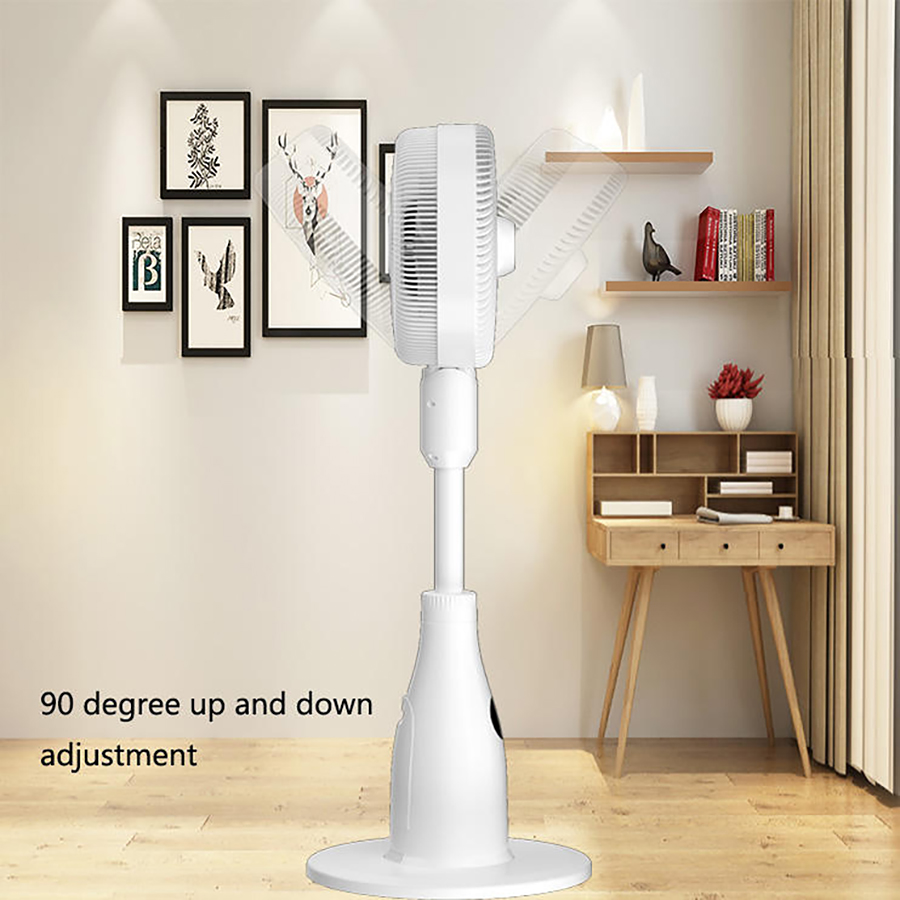
Partner with a Reliable Mist Fan Manufacturer
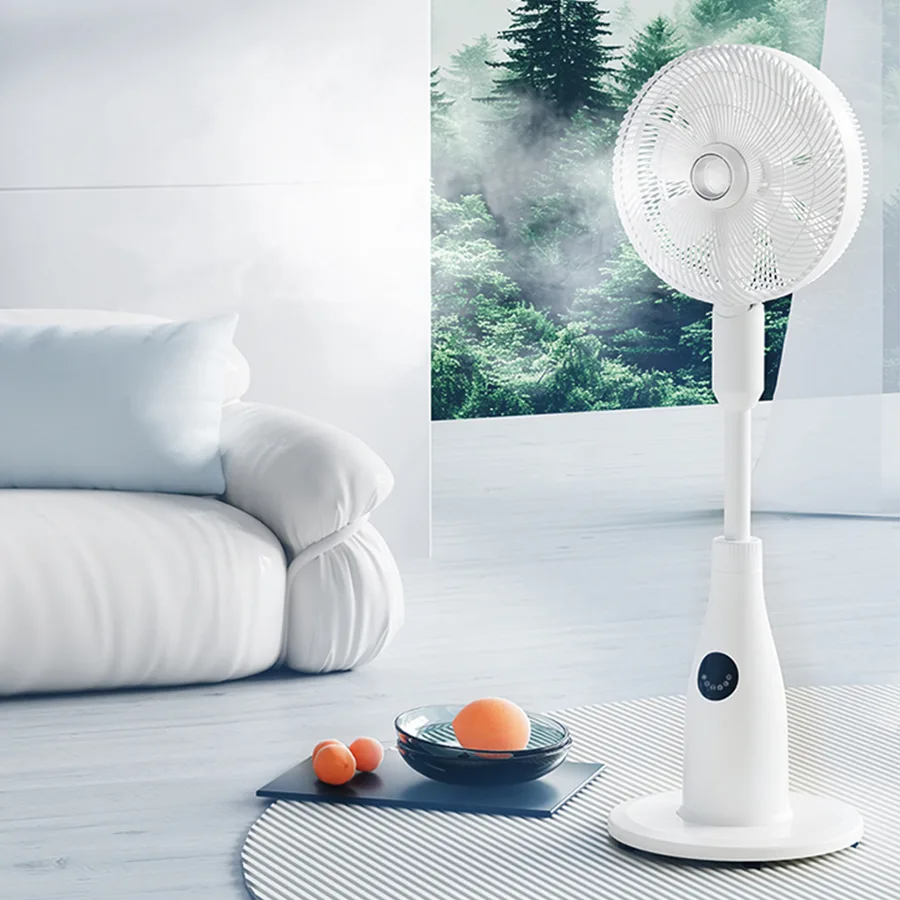
Difference Between a Misting Fan and a Misting System
| Feature | Misting Fan | Misting System |
|---|---|---|
| Design | Standalone fan with built-in misting nozzles and airflow system | Fixed network of pipes, nozzles, and high-pressure pumps |
| Cooling Method | Uses airflow to distribute fine water mist for evaporative cooling | Creates ultra-fine mist through multiple nozzles for wider-area cooling |
| Coverage Area | Suitable for small to medium outdoor areas, workshops, and events | Designed for large outdoor spaces, commercial areas, and permanent cooling needs |
| Installation | Easy installation with portable or semi-fixed options | Requires professional installation and fixed piping layout |
| Portability | Highly portable and easy to move between locations | Permanent solution with limited mobility |
| Best For | Restaurants, patios, warehouses, workshops, and temporary cooling applications | Large outdoor areas, entertainment venues, and long-term cooling projects |
Misting Fans
- Standalone cooling units equipped with built-in fans and misting nozzles.
- Spray fine water droplets into the airflow to create an evaporative cooling effect.
- Easy to install and move, making them suitable for patios, restaurants, outdoor events, and temporary cooling needs.
- Available in different sizes, from portable models for personal use to commercial models for larger spaces.
- Businesses can work with an experienced misting fan manufacturer to access customized designs and flexible production options.
Misting Systems
- Use high-pressure pumps, pipelines, and multiple nozzles to create continuous mist coverage.
- Designed for larger outdoor areas that require wider and more consistent cooling.
- Commonly used in gardens, pool decks, commercial spaces, farms, and industrial applications.
- Usually require fixed or semi-permanent installation for stable long-term operation.
- Suitable for projects that need customized cooling layouts and large-area temperature control.
How to Choose
Pick a misting fan if you want mobility, flexibility, and cooling for smaller spaces.
Go with a misting system if you need widespread, long-term cooling for large outdoor areas.
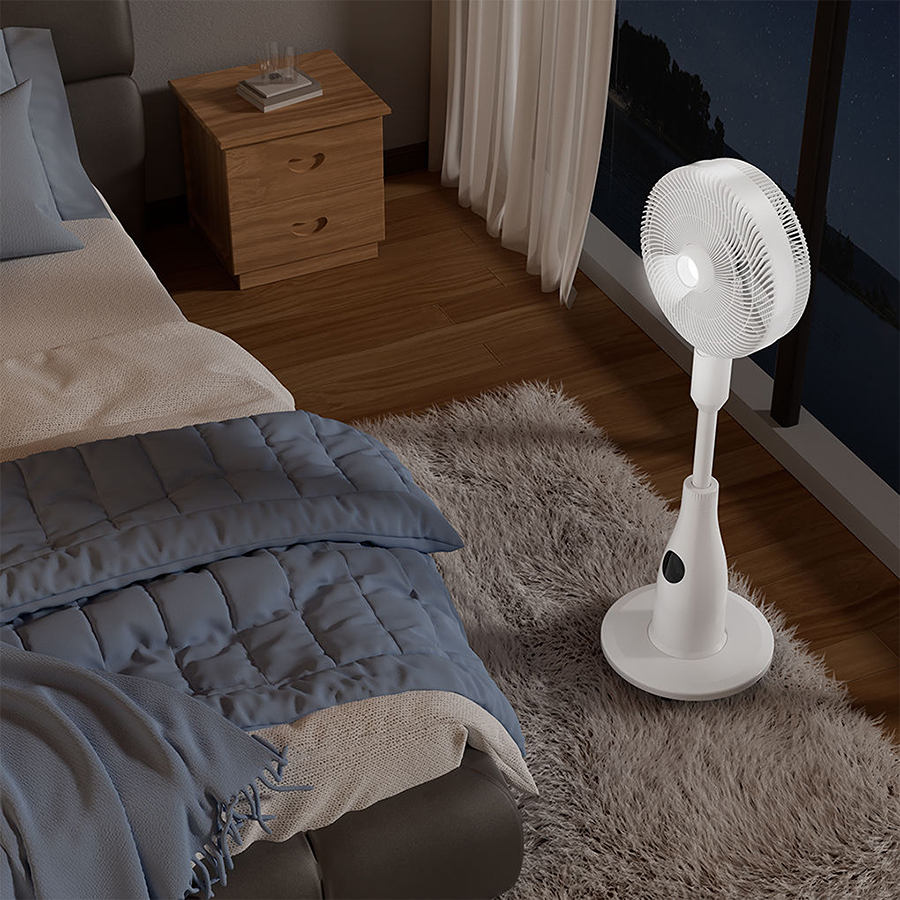
Pros and Cons of Misting Fan
Weighing the Benefits Against the Drawbacks
✅ Pros
- Effective Outdoor Cooling
Misting fans are excellent for patios, gardens, warehouses, and events. They cool large spaces quickly in dry climates.
- Energy Efficiency
Compared to air conditioners, misting fans consume much less electricity, making them a more sustainable cooling option.
- Portability and Convenience
Many models have wheels, adjustable heads, and detachable tanks, offering great flexibility.
- Dual Use Functionality
You can switch off the misting function and use the fan alone, making it adaptable for various weather conditions.
- Dust Suppression
In dry or open environments, misting fans can help reduce airborne dust and pollen by capturing small particles with fine water droplets.
❌ Cons
- Limited Effectiveness in Humid Climates
In places with high humidity, the evaporation process slows down, and cooling performance drops.
- Wet Surfaces and Slippery Floors
If not used carefully, especially with low-pressure models, water buildup can cause wet floors and slippery conditions.
- Maintenance Required
Regular cleaning is necessary to avoid nozzle clogging due to mineral buildup from hard water.
- Indoor Use Restrictions
Most misting fans are not suitable for enclosed indoor use due to moisture risks like mold, mildew, or damage to electronics.
- Requires Continuous Water Supply
Most misting fans require a constant water connection or regular tank refilling, especially during long operating periods.
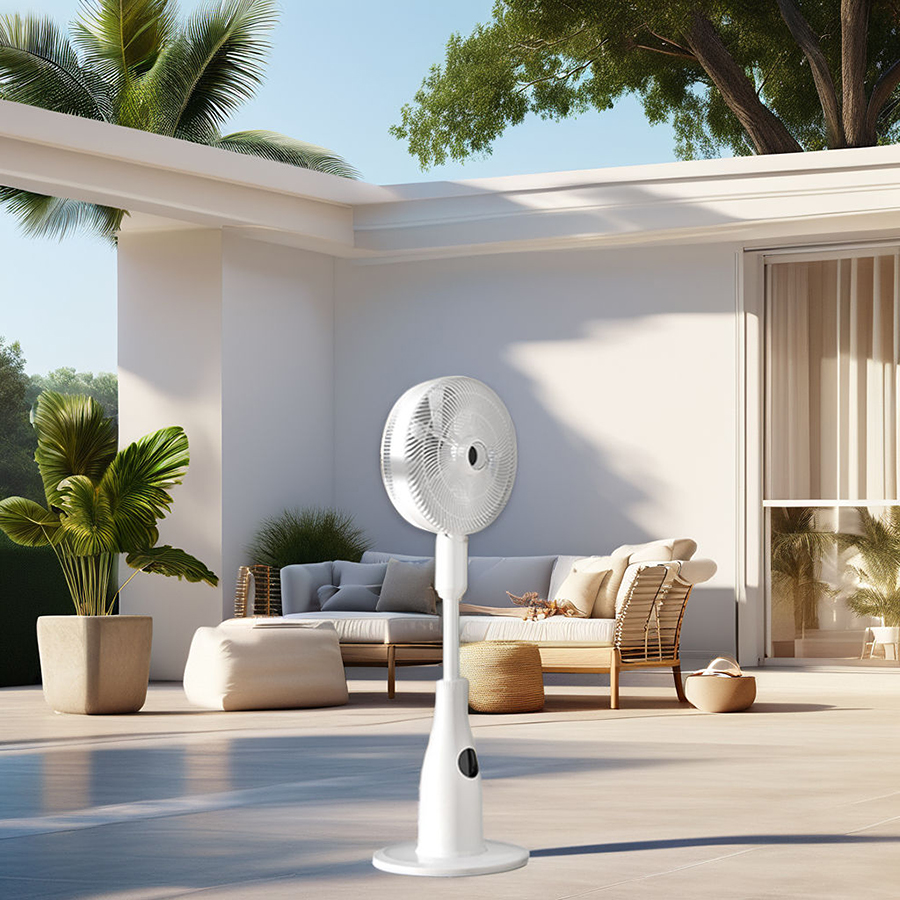
Where and When to Use a Misting Fan: Ideal Applications for Different Environments
Misting fans are widely used in outdoor, commercial, and industrial environments where traditional air conditioning is impractical or too costly. By combining airflow and evaporative cooling, they provide flexible temperature control for spaces that require effective cooling and good air circulation.
Outdoor Patios, Gardens, and Residential Areas
Portable misting fans are ideal for patios, gardens, and outdoor leisure spaces. They provide quick cooling during hot weather while allowing users to move the unit between different areas. Features such as adjustable speeds, water tanks, and timers make them convenient for home and personal use.
Restaurants, Cafés, and Commercial Outdoor Spaces
Restaurants, cafés, and outdoor dining areas often use wall-mounted or portable misting fans to improve customer comfort during warm seasons. These solutions help create a more comfortable environment without requiring complex installation or high energy consumption.
Warehouses, Workshops, and Industrial Facilities
Industrial misting fans are commonly used in warehouses, factories, workshops, and other large spaces where traditional air conditioning may not be practical. High airflow capacity and wide cooling coverage make them suitable for improving working conditions, reducing heat stress, and supporting employee comfort.
Sports Facilities and Fitness Centers
Sports venues, gyms, and training facilities use misting fans to help cool athletes and visitors in open or semi-open areas. Portable and high-pressure models can provide targeted cooling during training sessions, competitions, and outdoor activities.
Events, Outdoor Venues, and Temporary Cooling Projects
High-pressure misting fans are frequently used for outdoor events, concerts, exhibitions, and temporary cooling applications. Their mobility and strong cooling performance make them suitable for locations where fast installation and flexible operation are required.
Air Cooler vs Misting Fan: Which Is Better?
Comparing Two Popular Evaporative Cooling Options
| Feature | Misting Fan | Air Cooler |
|---|---|---|
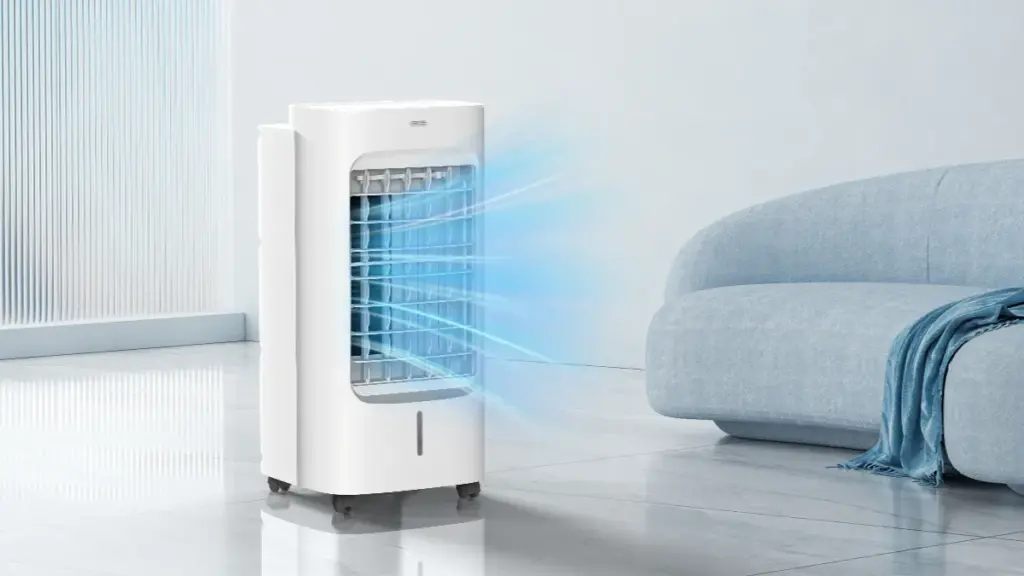
| Cooling Method | Sprays fine water mist into the air for evaporative cooling | Pulls air through water-saturated cooling pads to reduce air temperature |
| Best Application | Outdoor spaces, patios, events, workshops, and open areas | Indoor spaces, warehouses, factories, and commercial areas |
| Mobility | Usually portable and easy to move | Portable models available, but usually designed for fixed indoor cooling |
| Humidity Control | May increase moisture in enclosed areas | Adds moisture while cooling, suitable for dry climates |
| Ideal Users | Outdoor businesses, event organizers, and open workplaces | Homeowners, distributors, factories, and commercial users |
About Yika
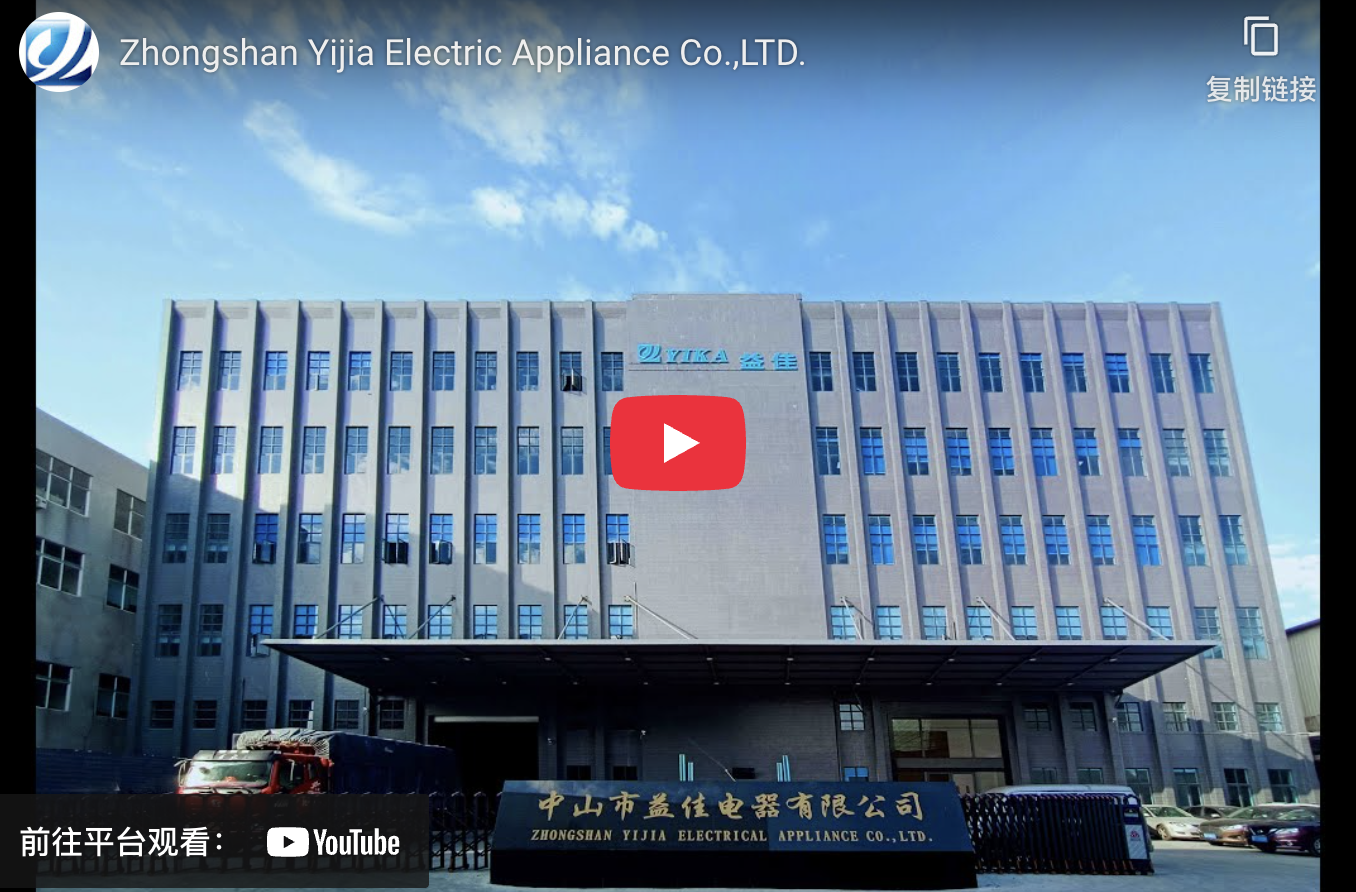
With 14+ years of manufacturing experience, Yika specializes in evaporative air coolers, misting fans, electric heaters, and other climate control products. The company provides OEM and customized cooling solutions for residential, commercial, and industrial applications.
Yika follows strict quality management systems and holds certifications including ISO9001, ISO14001, and ISO45001. As a Sedex Supplier Plus Member, Yika demonstrates reliable manufacturing capabilities and responsible production practices.
With professional R&D capabilities and advanced production facilities, Yika develops efficient and durable cooling products to support global distributors, wholesalers, and brand partners.
Conclusion
Misting fans offer an efficient cooling solution for outdoor and semi-open environments, including patios, restaurants, warehouses, and workshops. Their combination of airflow and evaporative cooling technology makes them a practical option for areas where traditional air conditioning is not suitable.
For distributors and commercial buyers, working with an experienced misting fan manufacturer can provide reliable products, customization options, and long-term support for different market needs.
FAQs
Does misting fan consume more electricity?
Misting fans consume much less power compared to air conditioners and have much higher air conditioning efficiency. A 250-300 watt mid-size misting fan is utilized, compared to 1000-2000 watts an hour consumed by a traditional split AC.
Is misting fan good for health?
Misting fans prevent the transmission of disease and bacteria due to the use of fresh water instead of reclaimed water. Misting and humidifying fans remove dust from the ambient air and are best used in areas with a lot of dust and monsoon winds.
What’s the Difference Between a Misting Fan and a Normal Fan?
- Cooling Mechanism
A standard fan simply circulates air, offering a breeze without changing the temperature. A misting fan actually lowers the air temperature through evaporation.
- Humidity and Comfort
Misting fans add moisture to the air, which can be refreshing outdoors. Regular fans don’t affect humidity at all.
- Energy and Water Use
A mist fan uses both water and electricity, while a regular fan only uses electricity. However, misting fans can still be more cost-effective than air conditioners.
- Application Suitability
Use misting fans outdoors or in semi-open spaces. Traditional fans are better suited for indoor cooling.
- Price and Features
Misting fans are generally more expensive than basic fans due to added features like mist nozzles, tanks, and pressure pumps.