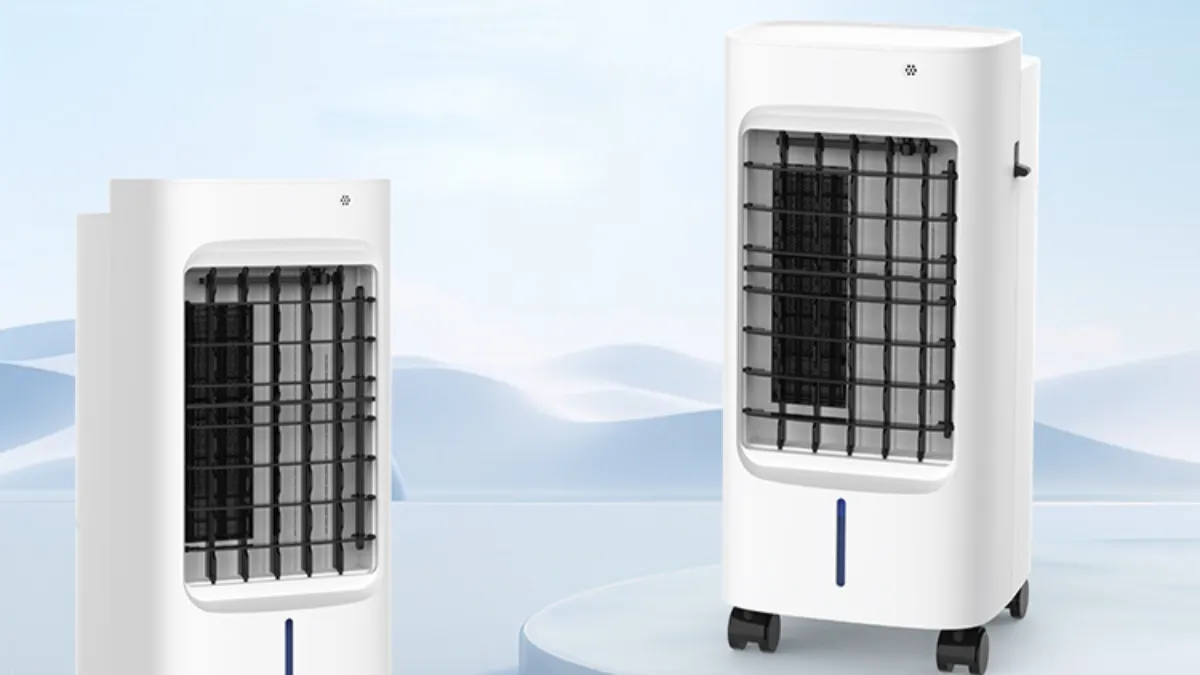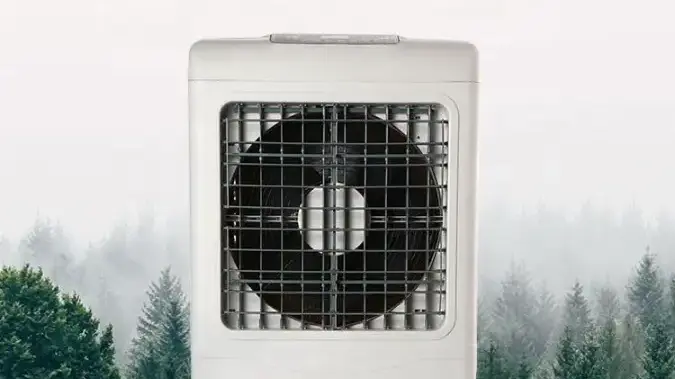
A restaurant patio, food court, workshop, or event space does not cool like a typical enclosed room. Open areas, trần nhà cao, changing occupancy, heat sources, and ventilation can all affect airflow and cooling performance. Floor area alone is therefore not enough to size a commercial air cooler accurately.
This guide explains how to size commercial evaporative air coolers based on space volume, luồng không khí, khí hậu, thông gió, và yêu cầu cài đặt. It also covers how these factors affect cooling performance across different commercial applications, from enclosed spaces to semi-open and outdoor areas.
Why Use Evaporative Air Coolers in Commercial Spaces
Open layouts, continuous fresh-air exchange, and large occupied areas can make conventional air conditioning less practical for some commercial applications.
See the full technical comparison between evaporative air coolers and split air conditioners →
Open and Semi-Open Spaces
Split AC works most effectively in enclosed spaces where cooled air can remain inside the conditioned area. Open patios, event spaces, hội thảo, and other semi-open areas allow cooled air to escape, which can reduce the effectiveness of conventional air conditioning.
Evaporative air coolers take a different approach by supplying a continuous flow of cooled air while allowing warm air to leave the space. This makes them suitable for applications where natural ventilation is part of the operating environment. The actual cooling effect still depends on climate, luồng không khí, space layout, and the level of enclosure.
Lower Energy Demand for Air Movement
Evaporative air coolers mainly use electricity for fans and water pumps, so their energy demand can be lower than mechanical air conditioning in suitable applications. Actual savings depend on the model, operating hours, khí hậu, and local electricity rates.
More Flexible Installation Options
Commercial air coolers can be configured as portable, treo tường, or ducted systems. Tùy thuộc vào mô hình, installation may require access to power, Nước, drainage, structural support, or ductwork. Portable units offer more flexibility, while fixed and ducted systems can provide more consistent airflow for larger areas.
For a broader overview of different air cooler types, their common applications, and key advantages, see Các loại máy làm mát không khí, Uses and Advantages.
Sizing Commercial Air Coolers by Space Type
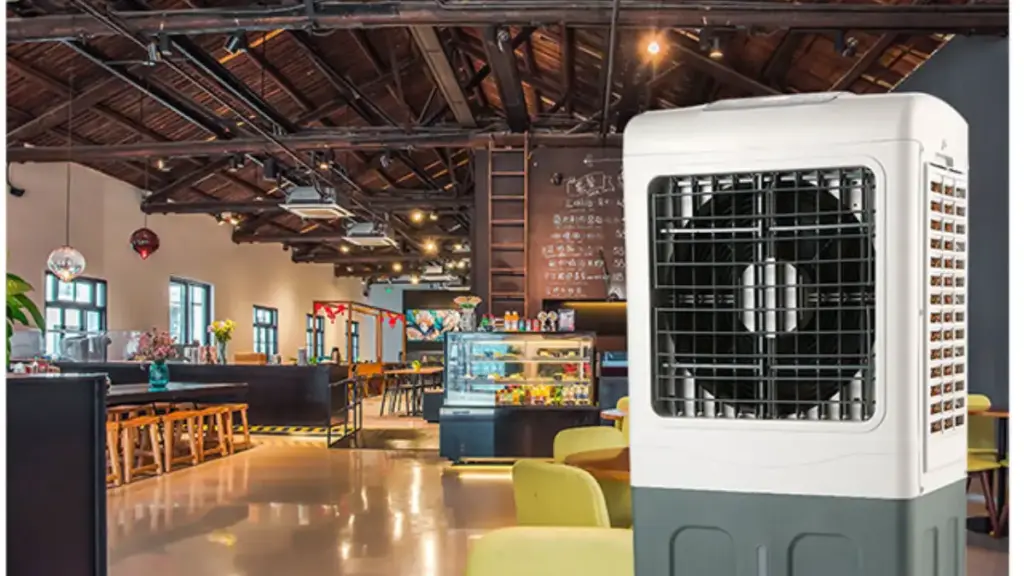
Floor area provides a starting point, but ceiling height, thông gió, occupancy, and heat sources also affect commercial cooling requirements.
Rule of Thumb: Use Airflow and ACH as a Starting Point
For enclosed and semi-open commercial spaces, không khí thay đổi mỗi giờ (ACH) can provide a useful starting point for estimating the required airflow. The basic calculation is:
Required airflow (m³/h) = Floor area (m²) × Ceiling height (m) × Target ACH
The estimated airflow can then be compared with the rated airflow of the selected commercial air cooler:
Number of units = Required airflow ÷ Airflow per unit
These calculations should be treated as an initial estimate rather than a final equipment specification. Higher occupancy, heat-generating equipment, frequent door opening, and strong solar exposure can increase the actual cooling requirement. For fully outdoor areas, ACH becomes less useful because cooled air disperses quickly, so airflow direction, bảo hiểm, and spot-cooling requirements should receive more attention.
Commercial Space Sizing Matrix
| Space Type | Typical Floor Area | Starting ACH | Suitable Configuration | Cân nhắc chính |
|---|---|---|---|---|
| Enclosed commercial space | 80-200 m² | 15-20 | Portable or fixed units | Occupancy and internal heat sources |
| Semi-open patio or terrace | 60-180 m² | 25-35 | Portable or wall-mounted | Ventilation and airflow direction |
| Large commercial hall | 300-800 m² | 30-40 | Multiple or ducted units | Air distribution across the space |
| Outdoor commercial area | 150-500 m² | Spot cooling | Portable or targeted units | Coverage area and airflow direction |
| Event tent or marquee | 100-400 m² | 30-40 | Portable or ducted | Solar exposure and tent ventilation |
The matrix provides a starting point for planning, not a fixed unit count. Final sizing should use the actual floor plan, chiều cao trần, airflow rating, khí hậu, thông gió, and operating conditions of the project.
Get a Commercial Cooling Solution for Your Project
Humidity Reality Check: Dry vs. Khí hậu ẩm ướt
Climate affects evaporative cooling performance, so humidity should be considered alongside airflow, space size, and ventilation.
Dry Climates
Dry air allows more water to evaporate from the cooling pads, making evaporative cooling more effective. Commercial air coolers can work well in dry regions across the Middle East, North Africa, inland Australia, and the southwestern United States.
These conditions are suitable for many applications, including warehouses, hội thảo, Hàng hiên, event spaces, food courts, and other areas with good ventilation. The actual cooling effect still depends on entering air conditions, cooler efficiency, luồng không khí, and installation.
Humid and Coastal Climates
Higher humidity limits evaporation, so the available temperature reduction is generally smaller. Evaporative cooling can still work in humid climates, but the application and ventilation conditions become more important.
- Semi-open spaces: Good cross-ventilation allows cooled air to move through the area without excessive moisture buildup.
- Spot cooling: Targeted airflow can provide local cooling for workstations, service areas, lối vào, or waiting zones.
- Hệ thống hybrid: Evaporative cooling can support mechanical air conditioning or fresh-air systems where additional cooling is needed.
For enclosed commercial spaces in consistently humid climates, conventional or hybrid cooling may provide more consistent temperature and humidity control. The appropriate solution depends on the climate, space layout, thông gió, and required comfort level.
For a deeper explanation of climate and evaporative cooling performance, see Làm thế nào khí hậu ẩm ảnh hưởng đến chất làm mát bay hơi.
Tùy chọn cài đặt: Cầm tay, Wall-Mount, and Ducted
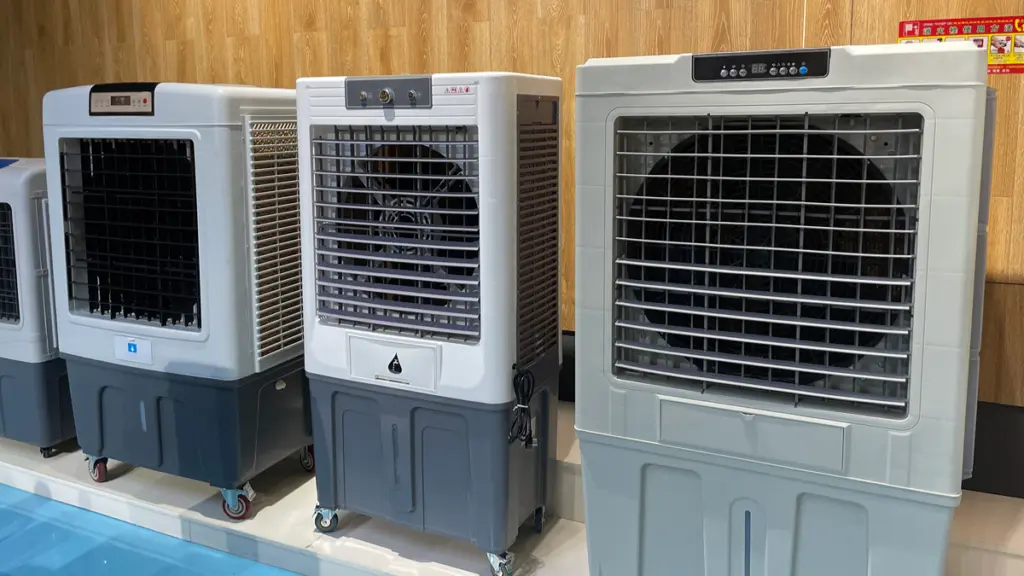
Installation type affects airflow distribution, space use, and maintenance access, so the setup should match the area’s layout and operating needs.
Portable Units — Flexible Cooling for Changing Spaces
Portable air coolers offer the most flexibility when cooling needs change between areas or seasons. They work well for patios, hội thảo, event spaces, service areas, and other commercial spaces where permanent installation is not practical.
Trước khi cài đặt, check the available floor space, cung cấp điện, water source, and the distance between the unit and the target cooling area. Unit placement also matters because nearby walls, nội thất, or equipment can affect airflow.
Wall-Mount Units — Space-Saving for Fixed Areas
Wall-mounted units keep equipment off the floor and work well where the cooling area has a relatively fixed layout. They can provide targeted airflow for semi-open spaces, hội thảo, service areas, and other commercial applications where floor space is limited.
Installation requires suitable structural support as well as access to power, Nước, and drainage where required. The mounting position should also allow sufficient airflow and convenient access for routine maintenance.
Ducted Units — Air Distribution for Larger Spaces
Ducted systems distribute cooled air through ductwork, making them useful when one unit needs to serve multiple areas or when airflow needs to reach a larger commercial space. Typical applications include warehouses, khu vực sản xuất, large halls, and multi-zone facilities.
Ducted installations require more planning because the duct layout, unit position, airflow distribution, cung cấp điện, and maintenance access all affect system performance. A floor plan and airflow assessment can help determine the most practical duct configuration before installation.
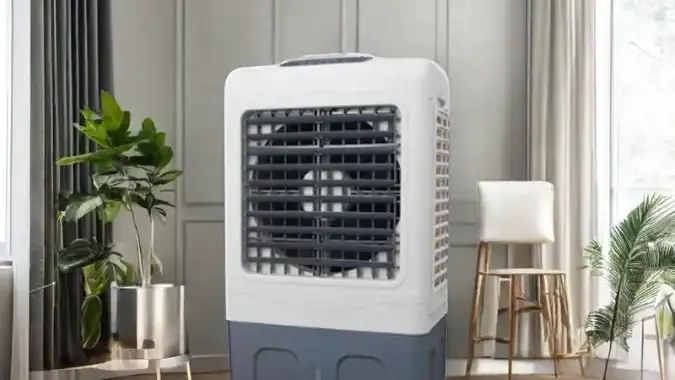
Tiếng ồn, Water and Maintenance for Commercial Air Coolers
Operating conditions can influence equipment performance over time, especially when commercial air coolers run frequently or in demanding environments.
Noise Considerations
Noise depends on fan speed, motor design, luồng không khí, and installation position. For units near workstations, service areas, or seating areas, check the manufacturer’s noise rating and consider the normal operating speed. Portable units can be moved farther from occupied areas, while wall-mounted or ducted systems can keep equipment away from the main activity zone.
Water Quality and Pad Life
Water quality affects cooling pad performance and maintenance needs. Hard water can cause mineral buildup on pads, xe tăng, máy bơm, and water lines, which may reduce efficiency over time. Regular cleaning helps control buildup, while areas with high mineral content may require more frequent maintenance or scale-control measures.
Commercial Air Cooler Maintenance
A maintenance schedule should reflect operating hours, chất lượng nước, and local conditions. Regular checks help maintain airflow and cooling performance while reducing avoidable equipment problems. For more practical maintenance and troubleshooting guidance, see Bảo trì máy làm mát không khí & Troubleshooting: Common Issues.
| Tính thường xuyên | Typical Maintenance |
|---|---|
| Daily or after extended use | Check water level, drain when required, and inspect the unit for visible issues |
| hàng tuần | Rinse cooling pads and check the tank, bơm, and water lines |
| hàng tháng | Clean the water system and check for mineral buildup or component wear |
| Seasonal | Deep-clean the unit and inspect controls, connections, and cooling pads |
These intervals are general guidelines rather than fixed rules. Always follow the manufacturer’s maintenance instructions and adjust the schedule based on operating hours and local water conditions.
Suy nghĩ cuối cùng
Commercial air cooler sizing depends on more than floor area. Khí hậu, thông gió, chiều cao trần, space layout, and operating conditions all affect the required airflow and cooling configuration. These factors are especially important when cooling open, semi-open, or large commercial spaces.
For commercial air cooler sourcing, share your space size, cách trình bày, khí hậu, and application requirements with TRÒN. For projects that require specific cooling configurations, airflow options, or product specifications, explore our Tùy chỉnh OEM service to discuss your requirements with the team.
Câu hỏi thường gặp
Are evaporative air coolers suitable for restaurants?
Đúng, particularly in dry or moderately dry climates. They work well in spaces with good air movement, such as semi-open dining areas, Hàng hiên, ruộng bậc thang, and other naturally ventilated venues. For fully enclosed restaurants in humid climates, split AC or a hybrid cooling system may be more suitable because evaporative cooling adds moisture to the air.
How do I size an air cooler for a restaurant or café?
Start with the venue’s floor area, chiều cao trần, khí hậu, and degree of enclosure. Open or semi-open spaces usually require more airflow because cooled air dissipates quickly. Instead of sizing by floor area alone, consider the required airflow, seating layout, heat sources, and whether the goal is full-space or spot cooling.
Do air coolers work in humid climates?
Đúng, but their cooling effect is lower as humidity increases. They are most suitable for semi-open venues with good cross-ventilation or for spot cooling in areas such as patios, lối vào, service counters, and queues. For enclosed spaces in humid climates, a hybrid system or conventional AC may provide more consistent comfort.
What maintenance does a commercial air cooler require?
Regular maintenance includes draining and refreshing the water, cleaning the cooling pads and tank, checking the pump and water lines, and removing mineral buildup when necessary. The exact schedule depends on water quality, operating hours, and local conditions. A consistent cleaning routine helps maintain airflow, hiệu suất làm mát, and water hygiene.
What should buyers check before importing commercial air coolers?
Buyers should check the certifications required in their target market, along with airflow capacity, power requirements, water consumption, độ ồn, phương pháp cài đặt, and after-sales support. Suppliers should also be able to provide valid certification documents and product specifications for the models being purchased.