Langkau ke kandungan

Ceramic and infrared heaters keep getting compared as rivals, and the comparison is wrong in a way that costs retailers sales. The two types solve different heating problems: a ceramic heater warms the air in a room, an infrared heater warms the person in front of it, and no customer buys only one of those jobs. Stocking the winner of a fake contest is how a winter line-up ends up strong in one aisle and empty in the other.
This guide explains how each type works, compares them across the factors buyers actually notice, heating method, kelajuan, bunyi bising, keselamatan, price, and then rules on the questions a stockist faces: which type fits which room, and whether a retail or e-commerce program should carry both. The verdicts are stated plainly, because assortment decisions do not reward fence-sitting.
Ceramic vs Infrared Heaters: Perbezaan Utama
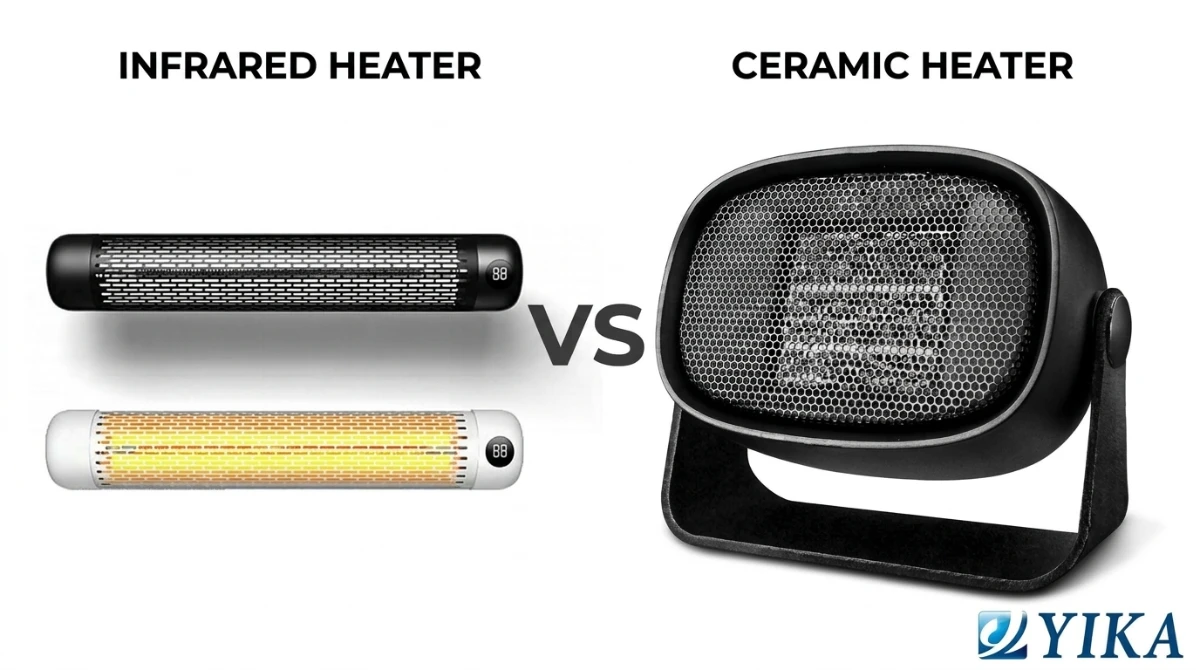
One sentence separates the categories: ceramic heaters are convection machines that raise air temperature, infrared heaters are radiant machines that warm surfaces and people directly. Everything else in the table follows from that split.
| Aspek | Ceramic fan heater | Pemanas inframerah |
|---|---|---|
| Kaedah pemanasan | PTC element + fan warms the air | Radiant element warms people and surfaces |
| What warms first | The room, gradually | You, within seconds, in line of sight |
| Bunyi bising | Bunyi kipas, typically 40–50 dB | senyap, no moving parts |
| Dust and air | Moves air around the room | No airflow, no dust circulation |
| Safety profile | Self-limiting element, cool-touch shell | Hot radiant face, mounting matters |
| Price tier | Entry to mid | Mid to premium |
| Best fit | Closed rooms needing air heat | Spot heat, quiet rooms, kawasan lapang |
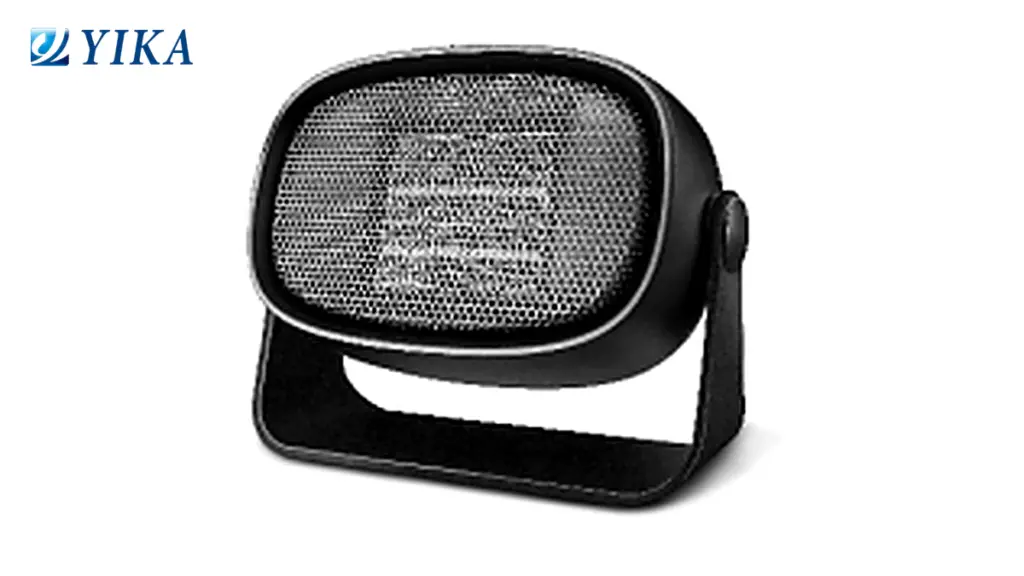
Ceramic Fan Heaters
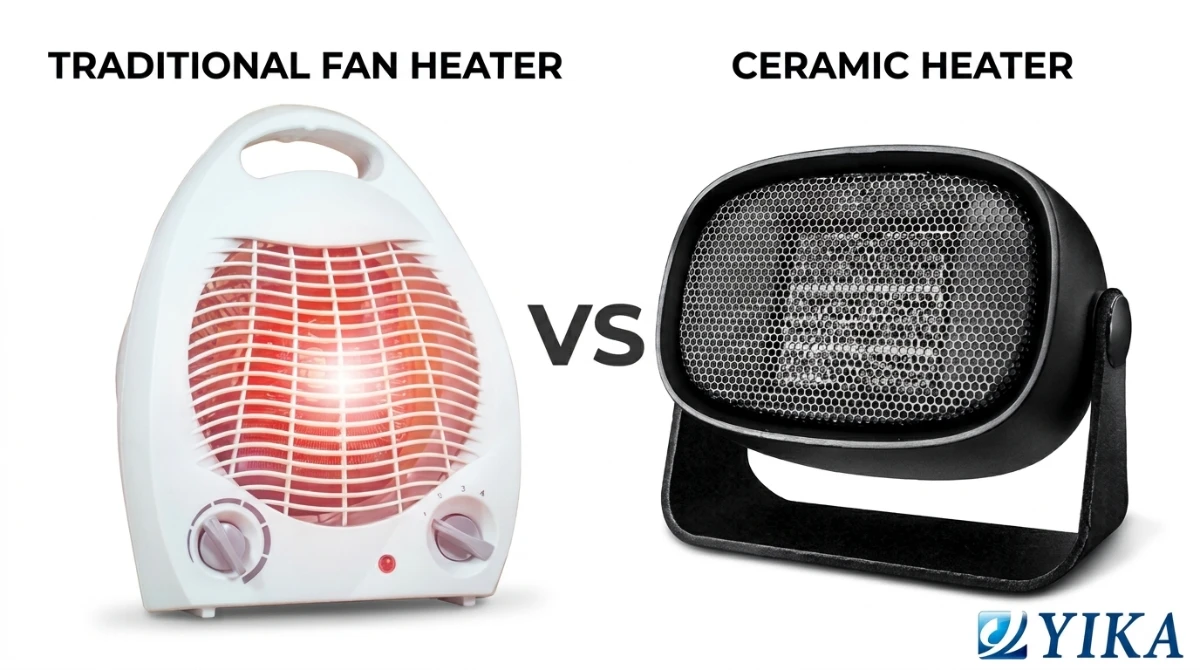
Ceramic fan heaters combine PTC heating elements with forced air circulation, making them suitable for quick and flexible indoor heating.
How Do Ceramic Fan Heaters Work?
Ceramic fan heaters use PTC (pekali suhu positif) ceramic elements to produce heat. Apabila elektrik melalui unsur-unsur ini, they warm up and transfer heat to the surrounding air. A built-in fan then blows air across the heated elements and distributes warm air throughout the room.
One feature of PTC technology is that electrical resistance increases as the element gets hotter. This helps regulate heat output and reduces the risk of overheating. Walau bagaimanapun, manufacturers still need to include safety features such as overheat protection to provide an additional level of protection.
Key Features of Ceramic Fan Heaters
Ceramic fan heaters offer a balance of heating speed, mudah alih, and convenient controls. Their main features include:
- Fast Heating: The fan helps distribute warm air quickly, making these heaters useful when users need to warm up a room in a short time.
- Tetapan boleh laras: Many models offer multiple heat levels, termostat boleh laras, ayunan, and fan-only mode to suit different heating needs.
- Safety Protection: Tip-over switches and overheat protection help reduce risks during daily use.
- Compact Design: Most models are lightweight and easy to move between rooms, making them suitable for flexible indoor use.
One limitation is fan noise. The airflow system produces sound during operation, which some users may find distracting in quiet spaces, especially when sleeping or working.
Where Are Ceramic Fan Heaters Commonly Used?
Their ability to distribute warm air makes ceramic fan heaters a practical choice for enclosed indoor spaces where users need quick, direct control over room temperature.
Common applications include bedrooms, pejabat rumah, ruang tamu, and small personal spaces. Users can move a portable unit between rooms and adjust the heat output based on their needs.
Walau bagaimanapun, ceramic fan heaters rely on airflow to distribute heat, so their performance can be less effective in open or drafty areas. Wind and air movement can carry warm air away before it reaches the desired area. Dalam keadaan ini, pemanas inframerah may offer a better solution because they heat people and objects directly rather than warming the surrounding air first.
Anda mungkin berminat: Apakah Pemanas Kipas Seramik PTC dan Bagaimana Ia Berfungsi?
Source Both Lines From One Factory
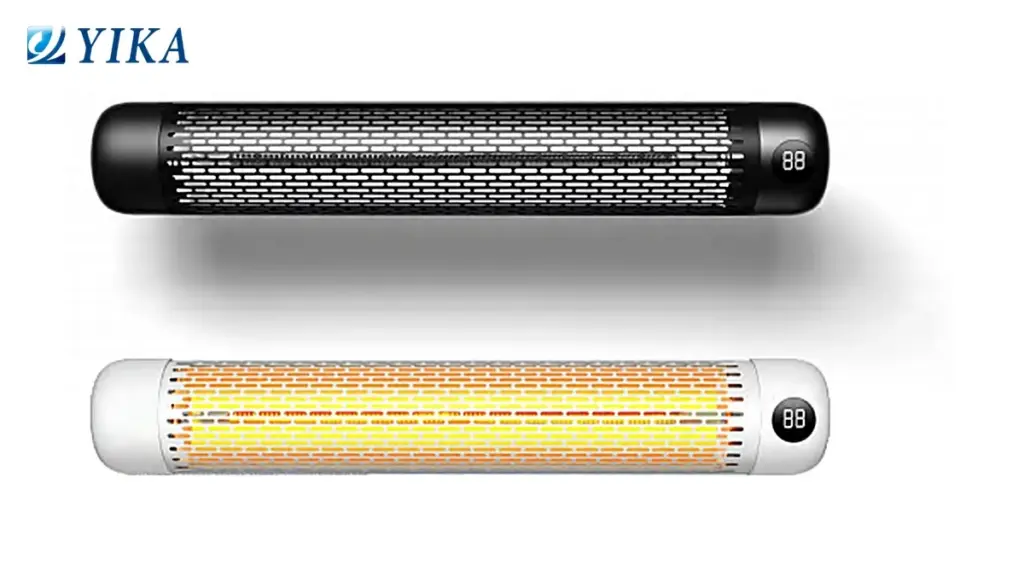
Pemanas Inframerah
Pemanas inframerah provide direct radiant heat, making them suitable for spaces where targeted warmth and quiet operation matter.
How Do Infrared Heaters Work?
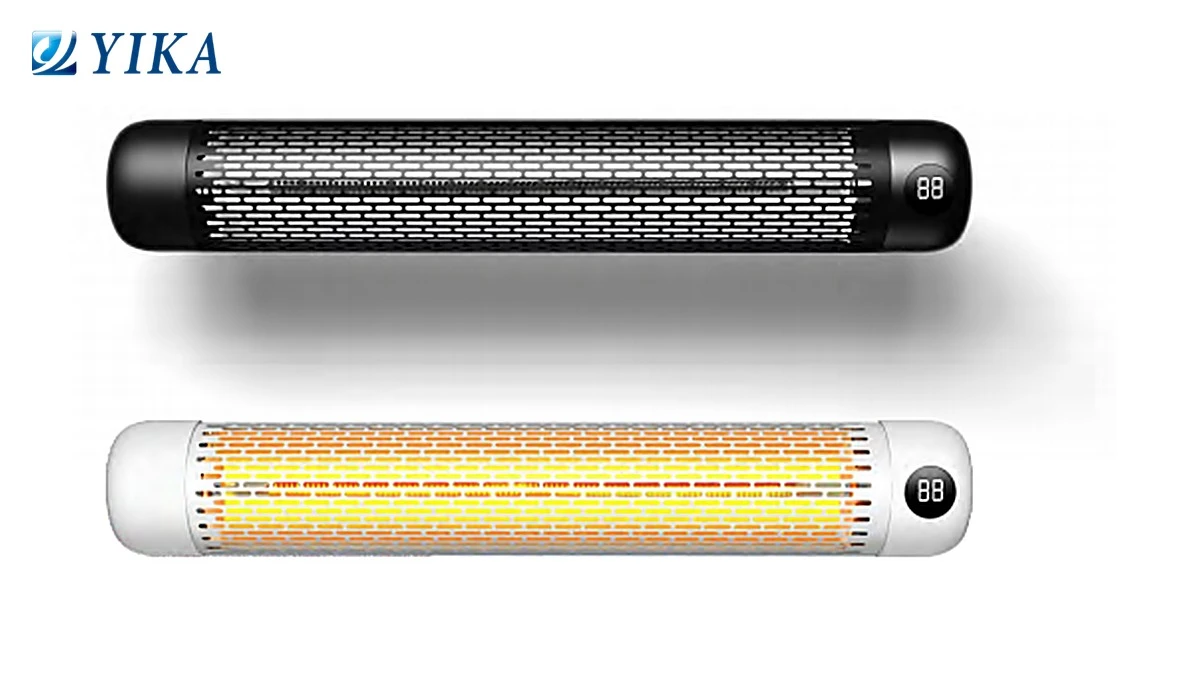
Infrared heaters use heating elements such as quartz tubes, carbon elements, or halogen lamps to produce infrared radiation. This energy travels through the air and warms people, perabot, lantai, and other surfaces it reaches. Unlike ceramic fan heaters, infrared models do not rely on a fan to distribute warm air.
Users can feel the heat within seconds when they stand within the heater’s effective range. The surrounding air may also become warmer as heated surfaces release heat into the space. Walau bagaimanapun, the heating effect depends on the heater’s direction, jarak, and power output. For a closer look at the differences between these heating methods, see our guide to infrared vs. pemanas perolakan.
Key Features of Infrared Heaters
Infrared heaters offer several features that make them different from fan-based heating models:
- Operasi Senyap: Most infrared heaters work without a fan, so they produce little operating noise and do not create forced airflow.
- Direct Heating: They warm people and objects within their coverage area without first heating all the air in the room.
- Flexible Installation: Available designs include portable units, wall-mounted heaters, ceiling-mounted models, and infrared panels. Some outdoor models also feature weather-resistant housings.
- Pertimbangan Keselamatan: The heating surface can become very hot during operation. Protective grilles, suitable mounting heights, and proper placement help reduce the risk of accidental contact, especially around children and pets.
The price varies depending on the heating element, power output, bahan perumahan, dan reka bentuk pemasangan. Some basic portable models are affordable, while larger panels and outdoor units may cost more.
Where Are Infrared Heaters Commonly Used?
Infrared heaters work well in spaces where users need direct warmth without relying on continuous air circulation. Their performance also makes them useful in areas where doors open frequently or outdoor airflow makes it difficult to maintain warm air.
Aplikasi biasa termasuk:
- Patios and Outdoor Areas: Wall-mounted or ceiling-mounted infrared heaters provide direct warmth to people sitting nearby, even in open spaces.
- Bilik air: Suitable infrared models can provide targeted warmth without using a fan to circulate air. Walau bagaimanapun, the heater must have the correct electrical and moisture protection rating for bathroom installation.
- Garages and Workshops: Infrared heaters warm people and work surfaces directly, which can be useful when large doors open frequently.
- Bedrooms and Living Spaces: Infrared panels provide quiet heating and can be mounted on walls or ceilings to save floor space.
Unlike ceramic fan heaters, infrared models focus on heating specific areas and objects rather than distributing warm air throughout an entire room. This makes them a practical option when users need targeted warmth or quiet operation.
How to Choose Between Ceramic and Infrared Heaters
The right model depends on the space, heating distance, keadaan pemasangan, and performance requirements of the intended application.
Heating Power and Coverage Area
Start by checking the heater’s wattage and recommended heating area. Ceramic fan heaters commonly use 1,500–2,000 W for small indoor spaces, while infrared heaters come in different power ratings for personal, room, and outdoor heating.
Walau bagaimanapun, wattage alone does not determine whether a heater can meet the user’s needs. For ceramic models, consider the room size, penebat, dan aliran udara, as these factors affect how quickly the heater can warm the space. For infrared models, pay attention to the heating distance and coverage angle. A model with a suitable power rating may still provide limited warmth if users sit outside its effective heating area.
Installation and Placement
Consider where and how the heater will be installed before choosing a model. Portable ceramic heaters offer flexibility for homes and offices, but buyers should check the unit’s dimensions, power cord length, and available floor space.
Infrared heaters offer more installation choices, including portable, dipasang di dinding, and ceiling-mounted designs. For fixed installations, check the mounting requirements, ketinggian pemasangan, and heating direction. Outdoor models also need suitable weather protection for their intended location.
Temperature Control and Operating Modes
Control functions affect how users adjust heating output and manage daily operation. Adjustable thermostats help ceramic heaters maintain a preferred room temperature, while multiple heat settings allow users to reduce power output when full heating capacity is not needed. Oscillation can also help distribute warm air across a wider area.
For infrared heaters, adjustable heat levels allow users to control the amount of radiant heat. Timers and remote controls can make operation more convenient, especially for wall-mounted or ceiling-mounted models. Compare these functions based on the intended use rather than choosing a model simply because it offers more features.
Safety Features and Certifications
Safety requirements should match the heater’s design and the market where it will be sold. Buyers should review both the built-in protection features and the certifications required for the destination country.
| Item to Check | What to Consider |
|---|---|
| Perlindungan Terlalu Panas | Helps prevent excessive temperatures during operation. |
| Perlindungan Tip-Over | Important for portable models that may be accidentally knocked over. |
| Protective Grilles | Help reduce direct contact with hot heating elements. |
| IP Rating | Check the required level of protection against water and dust for bathroom or outdoor models. |
| Market Certifications | Confirm compliance with applicable electrical safety standards and certification requirements in the destination market. |
Not every model needs the same protection features. Contohnya, a portable ceramic heater needs suitable tip-over protection, while an outdoor infrared heater requires a suitable enclosure and weather protection. Always check the product specifications and local installation requirements before making a final decision.
Which Heater Type Is Better for Each Room?
Different rooms have different heating needs. Compare the two heater types based on room conditions and everyday use.
| Room | Recommended Heater | Key Considerations |
|---|---|---|
| Bilik tidur | Inframerah | Quiet operation makes it suitable for sleeping. Ceramic heaters are a more affordable option for quick heating before bedtime. |
| Home Office | Kedua-duanya | Ceramic heaters provide quick personal warmth, while infrared models avoid fan noise during calls and meetings. |
| Bilik mandi | Inframerah | Suitable models provide direct warmth without forced airflow. Check the IP rating and bathroom installation requirements. |
| Ruang Tamu | Seramik | Suitable for quickly warming the air in small, ruang tertutup. Infrared works well for targeted warmth near seating areas. |
| Patio and Garage | Inframerah | Direct radiant heat works better in open or drafty spaces where warm air can easily escape. |
| Children’s Room | Kedua-duanya | Choose models with appropriate safety features and place them away from children, tempat tidur, and curtains. |
Fikiran Akhir
Ceramic and infrared heaters serve different heating needs. Ceramic fan heaters warm the air and work well for quickly heating enclosed indoor spaces, while infrared heaters provide direct warmth in specific areas, including open or drafty spaces. Understanding these differences helps identify suitable models for different rooms and applications.
BULAT offers ceramic and infrared heater models for different heating requirements, with product options for both indoor and outdoor use. Contact YIKA to discuss your sourcing needs, spesifikasi produk, and potential cooperation.
Soalan Lazim
Is ceramic or infrared better for a bedroom?
An infrared panel is the better bedroom heater because it runs silently, with no fan cycling through the night. A ceramic unit remains the budget option for rooms warmed just before sleep, but if the heater runs while anyone is sleeping, silence is the feature that decides.
Which is safer around children and pets?
Modern units of both types carry tip-over and overheat protection, so the real variable is placement. Ceramic offers a cool-touch shell at floor level; infrared’s radiant face runs hot and belongs behind a grille or mounted out of reach. Match the safety architecture to the room’s smallest occupant rather than to the type label.
Do infrared heaters use less electricity than ceramic?
At the same rated wattage, consumption is identical, watts are watts either way. The savings case for infrared is behavioral: radiant warmth feels comfortable at a lower air temperature and in less run time for spot duty, while ceramic must heat the whole air volume before anyone feels warm.
Which type heats a room faster?
Ceramic heats the room faster, because the fan drives warm air through the whole space within minutes. Infrared heats the person faster, warmth in the beam within seconds, while the room air catches up slowly. Speed depends on whether “the room” atau “you” is the thing being heated.
Can I use an infrared heater in a bathroom?
Ya, choose a fan-free infrared model sealed for damp locations and verify its ingress-protection rating on the spec sheet. Radiant heat suits bathrooms because it warms people and fixtures directly with no airflow, while ceramic fan units are the wrong tool for humid air and should stay out of the room.