Email Address *

Electric fireplaces for hotels and restaurants offer a practical alternative to gas, eliminating the need for chimneys, gas connections, and complex ventilation systems. For hotel FF&E procurement managers, restaurant operators, and hospitality designers, this simplifies installation planning and reduces project coordination. However, commercial projects still require careful consideration of fireplace design, operating demands, safety standards, and long-term costs.
This guide helps hospitality buyers assess fireplace options for different spaces, compare installation and operating costs, and evaluate commercial specifications and certifications. It also provides practical guidance for multi-property procurement and five-year cost planning, helping teams make informed purchasing decisions and avoid unexpected project expenses.
Why Hospitality Projects Choose Electric Over Gas Fireplaces
Public venues face stricter requirements than residential spaces. Fire codes, ventilation options, and building approvals all affect fireplace installation. For hotel groups managing multiple properties, these requirements can add considerable complexity to project planning.
Installation Requirements and Project Costs
Gas fireplaces require flue construction, gas connections, ventilation engineering, and recurring safety inspections. These requirements can extend installation timelines, particularly in buildings without existing gas infrastructure.
By comparison, electric fireplaces operate from a suitable electrical outlet and produce no direct emissions during use. They can also serve upper floors and interior zones where flue installation is impractical. Installation generally requires fewer structural modifications, reducing retrofit costs and coordination across multiple properties.
Flexibility Across Hospitality Spaces
Beyond installation, electric fireplaces offer greater flexibility for hospitality design. They can create a welcoming atmosphere in hotel lobbies, guest rooms, and restaurant dining areas.
In addition, electric units can move with interior renovations. They can be unplugged, relocated, and remounted without rebuilding gas infrastructure. This makes them a practical option for properties that regularly update their layouts or guest-facing spaces.
| Factor | Gas Fireplace | Email Address * |
|---|---|---|
| Installation cost | Mataas (flue + gas line + ventilation) | Mababa (standard outlet) |
| Ventilation requirement | Flue and combustion air | None |
| Point-of-use emissions | Oo (CO₂, NOₓ) | Zero |
| Relocation flexibility | Fixed to gas infrastructure | Unplug and move |
| Annual safety inspection | Required in most jurisdictions | Not required |
| Multi-property rollout | Slow (site-by-site gas engineering) | Fast (standardized install) |
One distinction is important: electric fireplaces provide ambience and supplemental zone heating, not whole-floor climate control. Building HVAC systems remain responsible for the primary heating and cooling load.
For a broader technical comparison of heat output, operating principles, and energy use, see our gas vs. electric fireplace guide. The following sections focus specifically on hospitality project requirements.
Zone-by-Zone Selection: Matching Form Factor to Space
Each zone in a hotel or restaurant carries its own duty cycle, viewing distance, and safety constraints, and the form factor follows the zone.
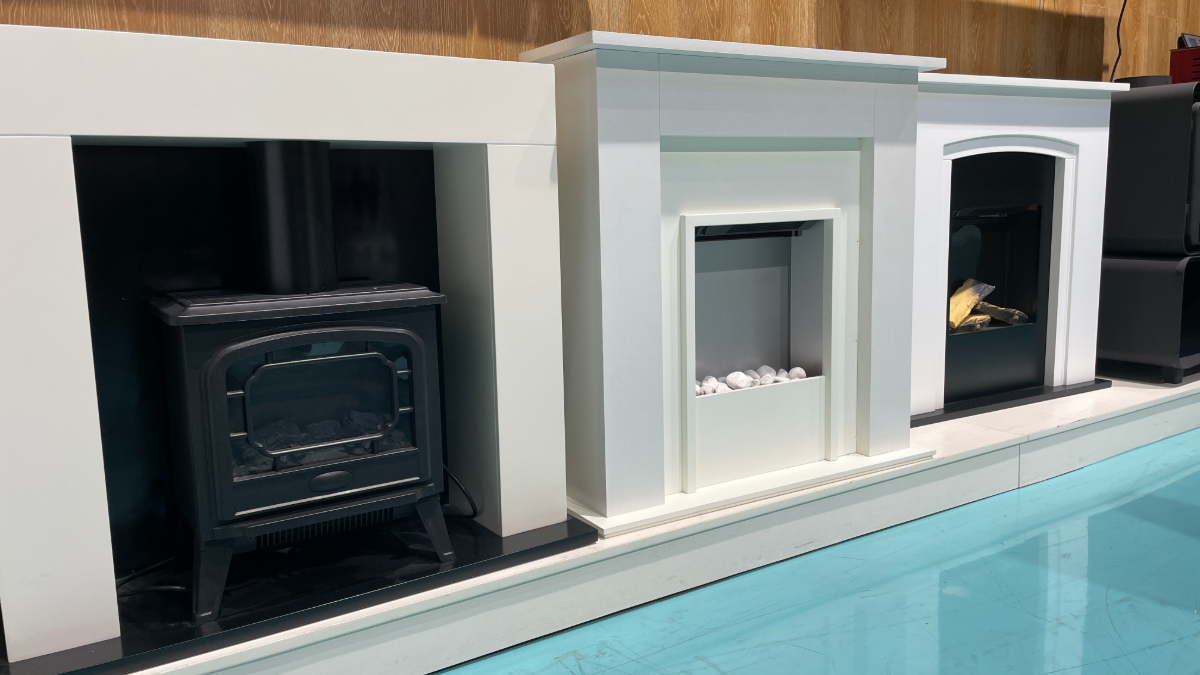
Lobbies, Lounges, and Reception
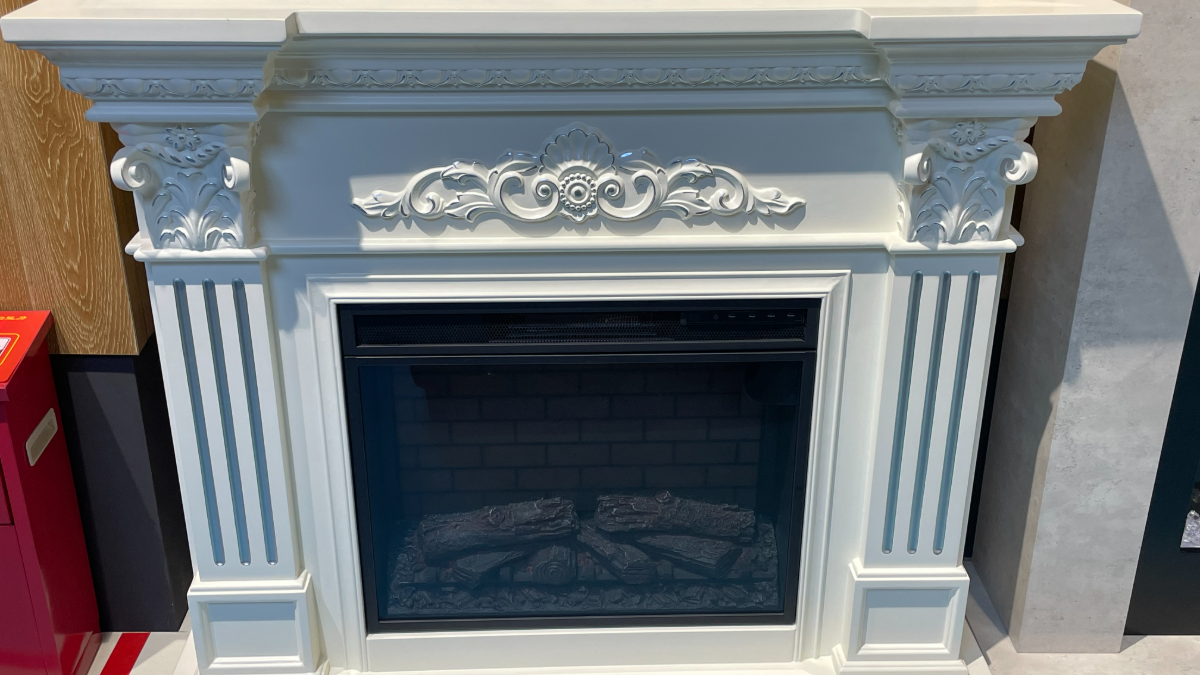
The lobby fireplace is the first impression, so it goes large: panoramic or three-sided flame displays that read from multiple angles, hung where the arrival sightline crosses them. Dimmable flame output matters here, because a flame tuned for evening disappears under midday daylight. Timer or ambient-light control lets the unit adjust as the lobby shifts from day to night without staff intervention. For brand consistency, the housing finish is customized to the lobby material palette, a standard OEM option across YIKA’s electric fireplace range.
Guest Rooms and Suites
Guest rooms prioritize quiet, compact footprint, and individual control: a wall-mounted or insert unit below the television or as a bed-wall feature delivers ambience without consuming floor space. Silent-mode operation is essential, since guests notice any mechanical hum at night, and cool-to-touch glass is non-negotiable where children stay. Suites upgrade the same platform: a custom built-in with surround and mantel creates the residential-luxury feel that justifies the room rate, with branded remotes and tuned LED colour temperature available through the OEM customization program.
Restaurants, Bars, and Dining Zones
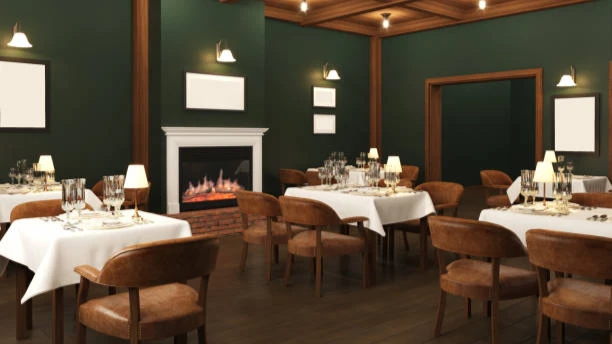
Dining spaces use fireplaces as atmosphere generators. Freestanding units work as room dividers in open-plan restaurants; wall-mounted units suit bar counters and lounge seating. Adjustable flame brightness and colour temperature let the operator tune the room through service, from warm amber at dinner to a cooler, dimmer tone late evening, so the fireplace tracks the room’s own lighting script. Procurement teams running a full-property program standardize on one insert platform with different surrounds, which keeps SKUs down and visual variety up.
| Form Factor | Best Zone | Pag-install | Key Spec |
|---|---|---|---|
| Wall-mounted | Lobby, guest room, bar | Bracket to wall, standard outlet | Slim profile, silent mode |
| Ipasok | Guest room, suite, restaurant | Recessed into wall or media wall | Flush finish, custom surround |
| Freestanding / Stove | Bar, restaurant, suite | Floor-standing, plug and operate | Portable, room-divider option |
| Suite / built-in premium | Suite, VIP lounge | Built-in with surround and mantel | Custom finish, branded controls |
Sizing follows the zone’s viewing distance, not the wall’s empty width. Lobbies scale up so the flame reads from the entrance; guest rooms stay compact; dining rooms sit between. Our electric fireplace size guide for commercial projects covers the sizing math in detail.
Discuss Your Hospitality Fireplace Project
Commercial-Grade Specifications: Flame Quality, Duty Cycle, and Noise
A residential unit runs a few hours each evening. A lobby fireplace runs 16 sa 20 hours a day, 365 days a year, and guests look at it the whole time. Hospitality duty cycles demand hardware specified for continuous operation, and they demand a flame effect that holds up under that scrutiny.
LED Flame Quality and Service Life
The flame is the product, and the LED light engine decides whether it survives close inspection. Quality commercial systems render flame movement at high refresh rates, so the effect reads as fire from across a lobby instead of as a looping video. Colour tuning matters just as much: warm settings in the 1,800 sa 2,000 kelvin range match candlelight and burning wood, the tone diners associate with a real hearth.
Service life changes the maintenance math. Commercial LED flame engines carry service lives of 25,000 hours and beyond, several years of daily lobby operation, with no lamp replacement inside a normal FF&E planning horizon. Flame-related maintenance on an electric unit shrinks to occasional glass cleaning and filter checks.
Duty Cycle and Thermal Management
Commercial-grade electric fireplaces pair heating elements rated for sustained operation with overheat protection circuits and thermal designs that move heat out of the electronics compartment. When specifying, ask the manufacturer for the continuous-operation rating and the thermal cutoff temperature. Units built for residential duty cycles degrade prematurely under commercial patterns and fail in front of guests.
Power Draw, Ingay, and the HVAC Division of Labor
In flame-only mode, a commercial electric fireplace draws roughly 50 sa 150 watts, and the running cost is correspondingly small: at 12 hours a day and an electricity price of $0.20 per kilowatt-hour, a 100-watt flame costs about $88 a year. With the heater engaged, draw rises into the 750-to-1,500-watt band for supplemental zone warmth. Building HVAC carries the primary climate load; the fireplace owns the atmosphere and the last degree of comfort in the zone it faces.
Noise is a specification, not a preference. The ambience circuit runs with no fan or moving parts, so the unit stays silent at night in a guest room and unobtrusive during dinner service.
Fire Safety and Certification for Commercial Installations
Commercial installations face a certification framework that is broader than residential, and much of it electric fireplaces satisfy by default. Cool-to-touch housing and automatic overheat shutoff come standard on commercial-grade units, and the zero-emission design raises no indoor-air-quality questions for occupied dining rooms.
Certification Requirements by Market
For the European Union, CE marking is mandatory and covers the Low Voltage and EMC directives; the UK requires UKCA marking; Germany and Austria often add GS to procurement specifications. Australia requires SAA approval, Japan applies PSE, and North America standardizes on NRTL listing, with UL and CSA marks treated as equivalent by building inspectors. In the United States, listed electrical equipment satisfies the commercial electrical-safety provisions of the model building codes without additional flame-safety approvals, because there is no flame.
That last point deserves emphasis for anyone comparing quotes. A gas or wood installation drags an entire combustion-compliance category behind it: venting, combustion air, gas safety inspections. An electric unit removes the category, and with it a recurring line of inspection cost. A manufacturer holding certifications across all major markets lets a hotel group standardize on one fireplace platform across properties in different countries.
What Procurement Teams Should Verify
Verify that the certificate scope covers the exact model being ordered and that test reports include commercial-duty conditions. Ask for the surface-temperature test report confirming glass and housing stay safe to touch after extended runtime, and confirm the factory’s quality system holds ISO 9001 certification. For the supplier-side checklist in full, our guide on choosing an electric fireplace manufacturer covers the audit trail from certificate to production line.
Multi-Unit Rollout: Timeline, QC, and Consistency
A hotel group ordering fireplaces for ten properties with 100 sa 200 rooms each is running a procurement program, and programs succeed on sequencing and consistency ahead of unit price. The program starts with a specification package: dimensional drawings for the design team, electrical specs for the installing contractors, a golden sample for approval, and volume pricing tied to order size. Get that package locked before any deposit moves.
Production and Shipping Timeline
For a standardized order of 200 sa 500 units with moderate customization, production runs 4 sa 6 weeks after sample approval. Sea shipping to European ports adds 2 sa 4 weeks, customs and last-mile delivery another 1 sa 2, roughly 8 sa 12 weeks from approved sample to site delivery. Build the schedule backward from each property’s opening date and hold a two-week buffer for installation and commissioning.
Quality Consistency Across Properties
Visual consistency is the brand risk in multi-property installs: LED colour temperature, housing finish, and flame behaviour must match from one property to the next. The controls are procedural: a golden-sample approval before mass production, pre-shipment inspection photos from the actual batch, and a spare-unit policy covering transit damage and installation defects.
Fulfilling the whole order in a single production batch is the strongest consistency lever, because every unit comes from one material set and one calibration run. High-capacity manufacturers can do this where smaller factories split orders across batches. When you place the order, confirm the batch plan together with the ship date.
Five-Year Total Cost of Ownership
Unit price is the smallest number in the decision. Over a five-year horizon, installation, inspection, maintenance, and energy decide which technology actually cost less.
| Cost Factor | Email Address * (per room) | Gas Fireplace (per room) |
|---|---|---|
| Unit cost | Moderate | Moderate to high |
| Pag-install | Mababa: bracket and outlet, typically a few hundred dollars | Mataas: flue, gas line, inspection, often thousands per retrofit unit |
| Annual maintenance | Minimal: glass cleaning, filter checks | Annual gas safety check required in most jurisdictions |
| Energy cost (annual) | Flame-only about $88/yr at 100 W and 12 h/day; heater use adds by zone | Fuel burn through every operating hour |
| Five-year total | Lower | Higher |
The five-year cost difference becomes clearer when installation, ongoing expenses, and deployment scale are considered together:
- Electric fireplaces: Lower installation costs eliminate much of the upfront expense associated with flues, gas connections, and combustion-related inspections. Flame-only operation also keeps annual electricity costs predictable, while heating use varies by room and operating schedule.
- Gas fireplaces: Higher retrofit costs, recurring safety inspections, fuel consumption, and potential venting repairs add to the total cost over time. These expenses become more significant across properties with multiple fireplace installations.
For hotel groups and restaurant chains, the cost advantage extends beyond individual units. A multi-property rollout can multiply installation and maintenance savings, making five-year total cost of ownership a more useful comparison than unit price alone.
Konklusyon
Electric fireplaces for hotels and restaurants offer a practical solution for hospitality projects that require flexible installation, consistent commercial performance, and predictable operating costs. To keep projects on track, buyers need clear specifications for each space, verified certifications, and coordinated multi-unit procurement. These measures help control project expenses and simplify deployment across multiple properties.
YIKA manufactures wall-mounted, insert, freestanding, and suite electric fireplaces at its 20,000-square-meter facility in Zhongshan, Tsina, with a monthly production capacity of 200,000 units. For hospitality projects, YIKA provides product recommendations, customization options, and rollout planning. Contact YIKA to discuss your project requirements and receive a solution aligned with your FF&E standards and opening schedule.
Frequently Asked Questions
Are electric fireplaces suitable for hotel guest rooms?
Oo. Electric fireplaces operate silently, produce zero emissions at the point of use, and feature cool-to-touch glass for guest safety. Wall-mounted and insert form factors fit below televisions or as bed-wall features without occupying floor space, and individual remote control lets guests operate the unit independently.
How realistic does the flame look in a commercial electric fireplace?
Modern commercial LED flame engines render movement at high refresh rates, so the effect reads as fire from across a lobby instead of as a looping video. Warm settings in the 1,800 sa 2,000 kelvin range match the colour of candlelight and burning wood, and brightness adjusts to hold up under daylight or dim evening light. Specify adjustable flame brightness and colour temperature when the unit will face mixed lighting conditions.
What is the difference between commercial and residential electric fireplaces?
Commercial units are rated for continuous duty of 16 sa 20 hours per day, with higher-grade thermal management components, LED light engines rated for tens of thousands of hours, and safety features such as cool-touch glass and tamper-resistant controls. Residential units are built for a few hours of intermittent use per day and degrade prematurely under commercial patterns.
Can electric fireplaces be customized for a hotel brand’s FF&E standard?
Oo. Manufacturers with OEM and ODM capability customize housing finish, LED ambience colour temperature, remote control branding, and insert dimensions to the FF&E specification, with customization finalized during the sampling phase. For multi-property rollouts, standardizing on one insert platform with different surround configurations reduces SKU complexity while keeping visual variety.
How long does a multi-hotel fireplace rollout take?
A typical rollout for 100 sa 200 rooms across multiple properties takes 10 sa 14 weeks from sample approval to full commissioning. Production runs 4 sa 6 weeks, shipping and customs add 2 sa 4 weeks, and on-site installation and staff training take 1 sa 2 weeks. High-capacity manufacturers can compress the production phase by fulfilling the entire order in a single batch.
What certifications do commercial electric fireplaces need?
Certification follows the installation market: CE for the EU, UKCA for the UK, GS commonly specified in Germany and Austria, SAA for Australia, PSE for Japan, and UL or CSA listing for North America. Procurement teams should verify that certificate scope covers the specific model and that test reports include commercial-duty conditions. Because electric fireplaces have no flame, no additional flame-safety approvals apply.
Can electric fireplaces operate continuously in a restaurant setting?
Oo. Commercial-grade electric fireplaces are designed for 16 sa 20 hours of daily operation, with overheat protection and thermally managed electronics handling the extended runtime. In flame-only mode the unit draws roughly 50 sa 150 watts, so continuous ambience through every service costs very little to run, and the zero-emission design raises no indoor-air-quality or ventilation issues.