Email Address *

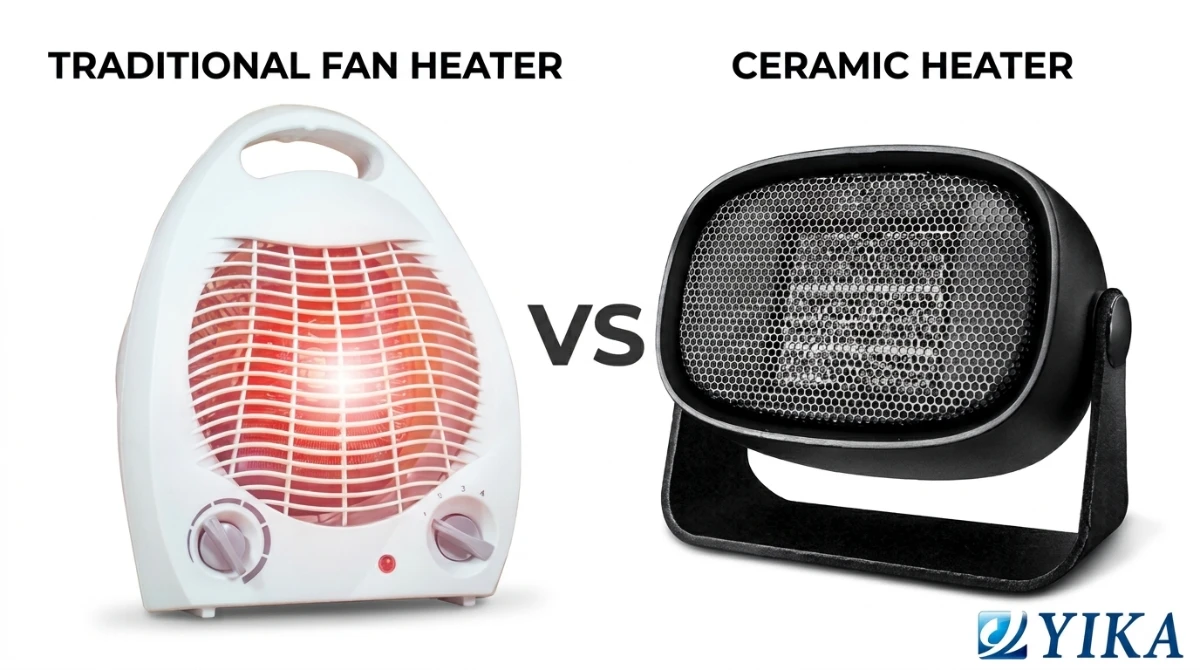
Ceramic heater vs. fan heater is a common comparison for buyers evaluating portable electric heating solutions for homes, Mga Tanggapan, and commercial spaces. Although both appliances use forced air to distribute heat, their heating elements and temperature control systems differ, affecting operating costs, heat output, and safety performance. Knowing these differences helps buyers assess which technology better matches their heating requirements and budget.
This guide compares ceramic fan heaters and traditional resistance-coil fan heaters across heating performance, electricity consumption, noise levels, and safety features. It also explains how PTC technology works and what specifications to check when evaluating fan heaters for different indoor applications.
What Is the Difference Between a Ceramic Heater and a Fan Heater?
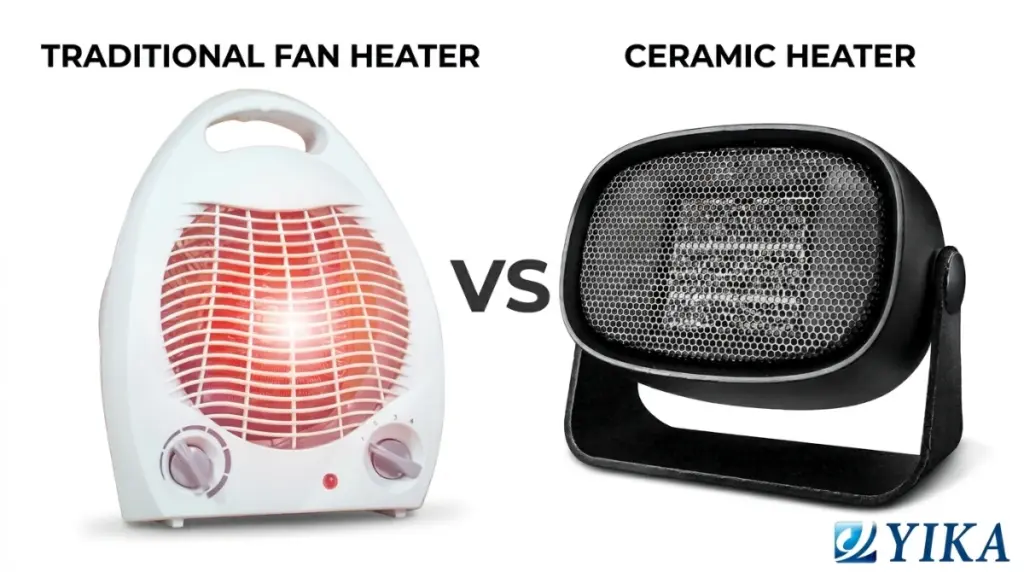
The main difference between a ceramic heater and a traditional fan heater lies in their heating elements and how they regulate temperature. A ceramic fan heater uses a ceramic heating element, often incorporating Positive Temperature Coefficient (PTC) technology, while a traditional fan heater typically relies on a metal resistance coil, such as a Nichrome wire, to generate heat.
Both types use a fan to draw in cool air, pass it over the heating element, and distribute warm air into the room. However, PTC ceramic elements have a self-regulating resistance characteristic: their electrical resistance increases as temperature rises, helping limit further heat generation. Traditional resistance-coil heaters rely more heavily on external thermostats and control systems to regulate operating temperature.
The following table highlights their key differences:
| Comparison | Ceramic Heater | Traditional Fan Heater |
|---|---|---|
| Heating Element | Ceramic heating element, often PTC-based | Metal resistance coil, commonly Nichrome wire |
| Heating Method | Ceramic element heating with forced airflow | Metal coil heating with forced airflow |
| Temperature Control | PTC self-regulation in applicable models, often combined with a thermostat | Relies on thermostats and electronic or mechanical control systems |
| Heat Distribution | Depends on fan speed, airflow, and outlet design | Depends on fan speed, airflow, and outlet design |
| Noise Level | Depends on fan motor and airflow design | Depends on fan motor and airflow design |
| Safety Features | May include overheat protection, tip-over protection, and PTC self-regulation | May include overheat protection, tip-over protection, and thermostat control |
| Initial Cost | Varies by heating technology, Disenyo, and features | Basic models are often available at lower price points |
How Do Ceramic Heaters and Traditional Fan Heaters Work?
Ceramic heaters and traditional fan heaters both convert electrical energy into heat and use forced airflow to distribute warmth. Their main difference lies in the materials used to generate heat and how the heating elements respond to rising temperatures. These differences influence temperature regulation, heat output, and the design of the heater’s control system.
How Does a Ceramic Heater Work?
A ceramic heater uses a ceramic heating element to generate heat when an electric current passes through it. Many modern models use Positive Temperature Coefficient (PTC) ceramic elements, which have a resistance that increases as their temperature rises.
The heating process typically follows three steps:
- Electrical heating: An electric current passes through the PTC ceramic element, generating heat through electrical resistance.
- Temperature self-regulation: As the ceramic element gets hotter, its electrical resistance increases, reducing the current flow and limiting further heat generation.
- Forced air circulation: A built-in fan draws cool air through the heater, directs it across the heated ceramic element, and pushes warm air into the surrounding space.
The self-regulating characteristic of PTC technology helps the heating element respond to temperature changes without relying entirely on external controls. However, most ceramic fan heaters also use thermostats and overheat protection to manage operating conditions and maintain the desired room temperature.
How Does a Traditional Fan Heater Work?
A traditional fan heater typically uses a metal resistance coil, commonly made from Nichrome (nickel-chromium alloy), to produce heat. When electricity passes through the coil, its electrical resistance converts electrical energy into thermal energy.
Its heating process generally involves three steps:
- Electrical heating: Current flows through the metal resistance wire, causing the coil to heat up.
- Airflow across the heating element: A fan draws room air into the heater and moves it across the hot metal coil.
- Warm air distribution: The heated air exits through the outlet and circulates into the room, raising the surrounding air temperature.
Unlike PTC ceramic elements, traditional resistance coils do not have the same pronounced self-regulating resistance response within their normal operating range. Therefore, traditional fan heaters generally rely on thermostats, thermal cutoffs, and other control components to regulate temperature and prevent overheating.
What Is the Difference Between PTC Ceramic and Metal Coil Heating?
Although both heating technologies rely on electrical resistance, their materials and temperature responses are different. PTC ceramic elements increase their electrical resistance as temperature rises, while metal resistance coils generally maintain a more stable resistance over their normal operating temperature range.
| Technical Factor | PTC Ceramic Heating | Metal Coil Heating |
|---|---|---|
| Heating Material | PTC ceramic compounds | Metal resistance wire, commonly Nichrome |
| Heat Generation | Electrical current generates heat within the ceramic element | Electrical current heats the resistance wire |
| Electrical Resistance | Increases significantly as temperature rises | Changes with temperature without the pronounced PTC response |
| Temperature Response | Self-regulating resistance helps limit further heat generation | Relies more heavily on external temperature controls |
| Heat Transfer | Air passes over the heated ceramic element | Air passes over the heated metal coil |
| Control Requirements | Commonly combines PTC characteristics with a thermostat and safety controls | Typically uses a thermostat and thermal protection components |
One important distinction is that PTC self-regulation does not automatically mean a ceramic heater consumes less electricity in every situation. Actual energy consumption depends on rated power, operating duration, thermostat settings, and room heating requirements.
Both technologies also depend on fan performance to distribute warm air. The heating element determines how heat is generated, while the fan motor, airflow volume, and outlet structure influence how that heat reaches the surrounding space.
Source Custom Ceramic Fan Heaters Direct from YIKA
Ceramic Heater vs. Taga-Pampainit ng Tagahanga: 5 Key Differences
Ceramic heaters and traditional fan heaters differ in heating technology, temperature control, and operating characteristics. These differences affect heating performance, electricity consumption, safety, and maintenance. The following five factors highlight what buyers should consider when comparing the two types.
Heating Speed and Heat Distribution
Both ceramic heaters and traditional fan heaters can deliver warm air shortly after startup. Actual heating speed depends on rated power, heating element design, and fan airflow rather than the heating technology alone.
Heat distribution also depends on fan speed, oscillation functions, and air outlet design. Adjustable airflow and oscillation can improve coverage, while directional outlets provide more concentrated heat. Buyers should compare wattage, airflow volume, and heating coverage when evaluating performance.
Energy Efficiency and Electricity Consumption
PTC ceramic elements have a self-regulating resistance characteristic. As temperature rises, electrical resistance increases, helping limit further heat generation. Traditional metal resistance coils rely more heavily on thermostats and external controls to regulate operation.
However, ceramic heaters do not automatically consume less electricity. Both technologies use electrical resistance to generate heat, so models with the same rated power and operating duration have broadly comparable energy consumption.
For example, a 1,500W heater running continuously for one hour consumes:
1,500W ÷ 1,000 × 1 hour = 1.5 kWh
Thermostats and ECO modes can reduce actual consumption by adjusting heating operation according to room temperature. Buyers should compare rated power, temperature controls, and expected usage when estimating running costs.
Safety and Overheat Protection
PTC elements offer a self-regulating temperature response, while traditional fan heaters generally rely more heavily on thermostats and independent thermal protection. However, neither heating technology guarantees overall appliance safety.
Important safety features include:
- Overheat Protection: Interrupts power when internal temperatures exceed safe limits.
- Tip-Over Protection: Cuts power if the heater falls over.
- Thermostat Control: Regulates heating to maintain the set temperature.
- Thermal Fuse: Provides an additional cutoff against abnormal temperatures.
- Heat-Resistant Housing: Helps protect external surfaces and internal components.
Electrical insulation, component quality, housing design, and applicable safety certifications should also be considered.
Noise Level and Operating Comfort
Both types of fan heaters generate noise through their motors and moving air. Neither ceramic nor metal coil heating is inherently quieter.
Operating noise depends on motor quality, fan speed, airflow design, and housing vibration. Lower fan speeds can reduce noise but may also decrease airflow and heat distribution. For bedrooms and offices, buyers should compare actual noise specifications, preferably measured in decibels (dB).
Price and Maintenance
Basic traditional fan heaters are often available at lower price points, while ceramic models may cost more depending on PTC elements, temperature controls, and additional features. Actual prices vary by manufacturer and product configuration.
Maintenance requirements are similar for both types. Regular care includes:
- Cleaning air inlets and outlets to prevent dust buildup.
- Keeping fan components free from dust and debris.
- Inspecting power cords for visible damage.
- Maintaining clear ventilation around the heater.
Long-term reliability depends on component quality, manufacturing standards, and protection systems rather than heating element material alone. For commercial buyers and distributors, warranty coverage, spare parts availability, and manufacturer support also influence the total cost of ownership.
Which Is Better: Ceramic Heater or Traditional Fan Heater?
The better option depends on your heating needs, available budget, and how often the appliance will operate.
When Should You Choose a Ceramic Heater?
A ceramic heater is worth considering when temperature regulation and flexible operation are important. Its PTC heating element offers self-regulating characteristics, making it suitable for applications where controlled heat output is a priority.
Consider a ceramic fan heater if you:
- Need Flexible Temperature Control: Models with adjustable thermostats, multiple heat settings, and ECO modes allow users to manage indoor temperatures according to their comfort needs.
- Heat Bedrooms or Home Offices: Compact ceramic fan heaters can provide localized warmth for personal spaces without requiring a large heating system.
- Use the Heater Regularly: Programmable timers and adjustable heating settings offer greater control over daily operation.
- Prioritize Temperature Management: PTC technology, combined with independent overheat protection and tip-over switches, provides additional temperature and safety controls.
For personal spaces such as bedrooms and home offices, YIKA’s Mini PTC Fan Heater offers a compact 500W heating solution.
When Is a Traditional Fan Heater a Better Choice?
A traditional fan heater can be a practical option when basic heating performance and initial purchase cost matter more than advanced control features. Many resistance-coil models offer straightforward operation and meet basic indoor heating requirements.
Consider a traditional fan heater if you:
- Have a Limited Budget: Basic resistance-coil models are often available at lower purchase prices, making them suitable for budget-conscious buyers.
- Need Occasional Heating: Simple heating functions can meet requirements in rooms or workspaces that only need warmth for short periods.
- Prefer Basic Controls: Standard power settings and thermostat controls may be sufficient without programmable functions or advanced temperature management.
- Need Localized Heating: Direct airflow can provide warmth for nearby occupants in smaller rooms or designated work areas.
- Want a Straightforward Product Design: Basic construction and operation can make these models suitable for entry-level product ranges.
Ultimately, the ceramic heater vs. fan heater decision depends on the balance between temperature control, purchase cost, and intended application. Buyers should compare product specifications and actual usage requirements rather than assuming one heating technology performs better in every situation.

How to Choose the Right Fan Heater for Your Needs?
Several product specifications can help buyers compare fan heaters and identify models that match their indoor heating requirements.
Consider the Heating Power and Room Size
Rated power affects heat output, but the required wattage also depends on room size, ceiling height, insulation, and local climate.
- 1,000W: Suitable for smaller personal spaces or supplementary heating.
- 1,500W: A common option for bedrooms, home offices, and medium-sized rooms, depending on insulation.
- 2,000W: Provides higher heat output for larger spaces or greater heating demands, subject to room conditions and electrical capacity.
Do not evaluate heating performance by wattage alone. Airflow, room conditions, and heating coverage also matter.
Check Temperature Control and Heating Settings
Flexible controls allow users to adjust heat output and manage operating time.
- Adjustable Thermostat: Maintains the selected temperature.
- Multiple Heat Settings: Offers different power levels for varying heating needs.
- ECO Mode: Adjusts heating operation to help manage energy consumption.
- Timer Function: Allows users to set operating periods.
- Automatic Temperature Regulation: Adjusts heating operation according to room temperature.
For buyers who prefer simple operation, YIKA’s NQ-MN09 Mini PTC Fan Heater features a 500W heating system and mechanical controls.
Look for Essential Safety Features
Safety features help reduce risks during daily operation. Buyers should check the following components and product documentation:
- Overheat Protection: Stops heating when internal temperatures become excessive.
- Tip-Over Switch: Cuts power if the heater falls over.
- Flame-Retardant Housing: Helps reduce the risk of flame spread.
- Thermal Fuse: Provides an additional cutoff against abnormal temperatures.
- Electrical Safety Certifications: Verify compliance with the safety standards required in the target market.
Evaluate Fan Design and Noise Performance
Fan design affects airflow, heat distribution, and operating comfort. Compare these specifications before purchasing:
- Fan Motor Quality: Influences operating stability and service life.
- Airflow Volume: Determines how much air the heater circulates.
- Adjustable Fan Speeds: Allows users to control airflow intensity.
- Air Outlet Design: Affects airflow direction and heating coverage.
- Noise Level: Check the manufacturer’s noise data, preferably measured in decibels (dB).
For private-label projects, buyers can explore YIKA’s OEM and Customization services for product design, control functions, plug types, and packaging options.
Final Thoughts
The main difference in the ceramic heater vs. fan heater comparison lies in the heating elements and their temperature response. However, neither type is automatically better in every situation. Actual heating performance depends on rated power, heating element design, fan airflow, and temperature control. These factors affect heat output, operating comfort, and energy use.
Room size, usage frequency, badyet, and required features all matter when evaluating a fan heater. A ceramic fan heater may suit users who need flexible temperature control, while a traditional model can meet basic heating needs. YIKA provides electric heating solutions for different market requirements. Explore our Fan Heater collection to compare available models and product features.
Frequently Asked Questions
Is a Ceramic Heater the Same as a Fan Heater?
Not exactly. A ceramic heater is a type of fan heater when it uses a fan to distribute warm air. The main difference lies in the heating element. Ceramic fan heaters use ceramic elements, often with PTC technology, while traditional fan heaters commonly use metal resistance coils.
Does a Ceramic Fan Heater Use Less Electricity Than a Traditional Fan Heater?
Not necessarily. Both types use electrical resistance to generate heat. At the same rated power and operating time, their electricity consumption is generally similar. A thermostat or ECO mode can reduce actual energy use by adjusting heating operation according to room temperature.
Does a Ceramic Heater Heat a Room Faster Than a Traditional Fan Heater?
Not in every case. Both types can produce warm air shortly after startup. Heating speed depends on rated power, heating element design, fan airflow, and room conditions. Buyers should compare these specifications rather than assume ceramic technology always heats faster.
Are Ceramic Fan Heaters Suitable for Large Rooms?
Ceramic fan heaters are generally more suitable for personal heating, smaller rooms, and supplementary heating. Their ability to warm a larger space depends on rated power, airflow, room insulation, and ceiling height. For larger areas, buyers may need multiple units or a heating system designed for higher capacity.
What Should Importers Check When Buying Ceramic Fan Heaters in Bulk?
Importers should evaluate more than the unit price. Important factors include rated power, voltage and plug requirements, thermostat functions, safety protection, product certifications, and quality testing. Product samples, warranty terms, delivery schedules, and spare parts support should also be confirmed before placing a bulk order.
Can Ceramic Fan Heaters Be Customized for Wholesale Orders?
Oo. Depending on the manufacturer and model, customization may include heating power, product size, appearance, housing materials, control functions, and packaging. Buyers should confirm available options, minimum order quantities, certification requirements, and production lead times before starting an OEM or private-label project.