High cooling costs, insufficient airflow, and unsuitable equipment are common challenges for businesses managing warehouses, Workshops, and other large spaces. A kommerzieller Verdunstungsluftkühler provides an efficient way to improve air circulation and reduce cooling expenses, but choosing a suitable solution requires careful evaluation of space size, airflow capacity, Betriebsbedingungen, and product quality.
This guide helps distributors, Großhändler, and facility owners understand different commercial air cooler types, key selection factors, usage methods, and maintenance requirements, while also explaining how to evaluate reliable evaporative air cooler manufacturers for long-term cooperation.
What Is a Commercial Evaporative Air Cooler?
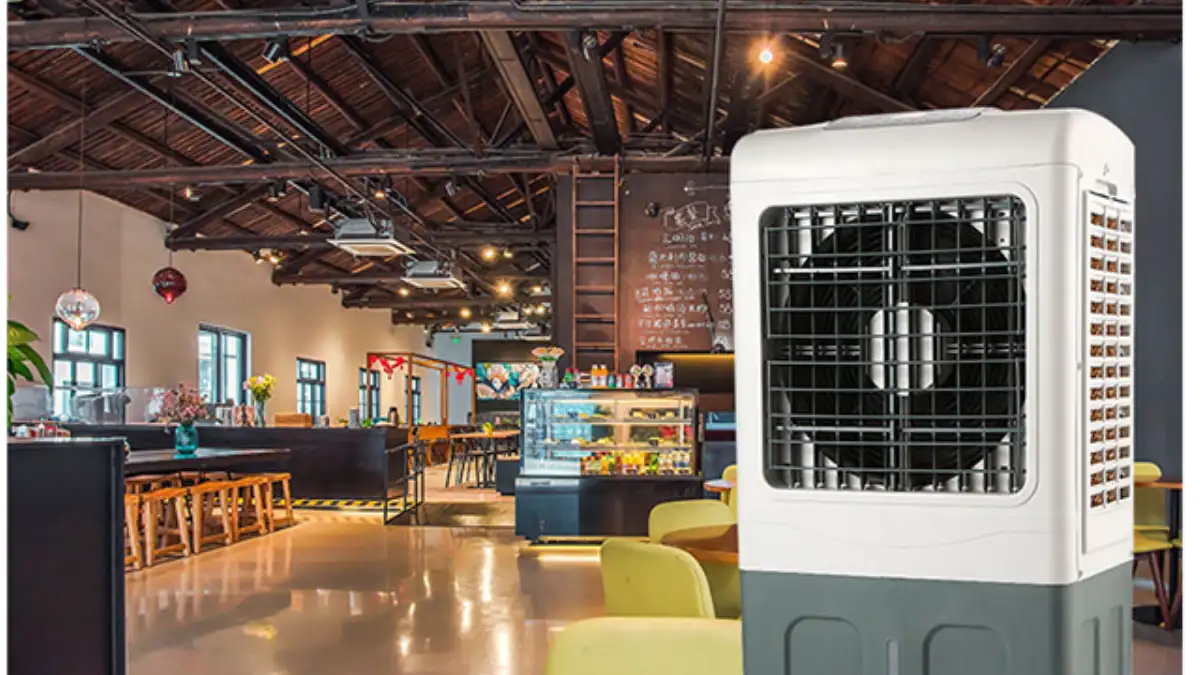
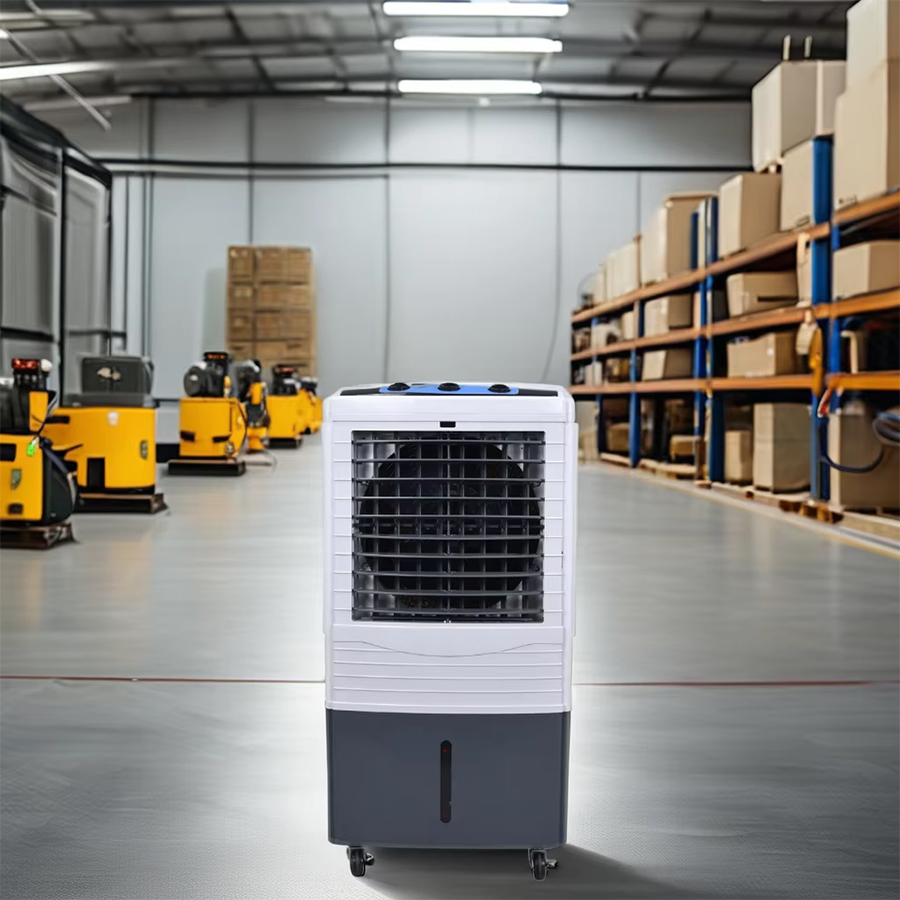
A kommerzieller Verdunstungsluftkühler is a cooling solution designed for large spaces such as warehouses, Workshops, Fabriken, and commercial facilities. It uses water evaporation and strong airflow to reduce heat and improve air circulation while consuming less energy than traditional air conditioning systems.
Compared with residential evaporative air coolers, commercial models are built for larger areas, longer working hours, and more demanding environments. They provide higher airflow, wider cooling coverage, and stronger durability for continuous operation.
Commercial evaporative air coolers are commonly used in:
- Warehouses and distribution centers
- Manufacturing workshops
- Factories and production areas
- Garages and outdoor commercial spaces
In simple terms, residential air coolers are designed for small rooms, while commercial evaporative air coolers are developed for large-area cooling where airflow capacity and operating reliability are more important.
How Does a Commercial Evaporative Air Cooler Work?
A commercial evaporative air cooler reduces heat by combining water evaporation, Kühlkissen, and powerful airflow. Unlike traditional cooling systems, it focuses on moving and cooling large volumes of fresh air, making it suitable for warehouses, Workshops, and other open commercial spaces.
Der cooling process mainly depends on three key components:
Water Pump and Cooling Pads
The water pump continuously moves water from the tank to the evaporative air cooler pad, keeping the surface wet during operation. These specially designed pads provide a large contact area between water and air, allowing heat to be removed more effectively through evaporation.
Airflow and Heat Exchange
A powerful fan draws warm air into the unit and pushes it through the wet cooling pads. When hot air passes through the pads, water absorbs heat from the air and changes into vapor. This process lowers the air temperature while maintaining continuous airflow.
Cool Air Distribution
After passing through the cooling pads, the cooled air is distributed into the surrounding area. For large spaces, an industrial evaporative air cooler uses higher airflow capacity to move cool air across wider areas and improve workplace ventilation.
Partner with a Reliable Commercial Air Cooler Manufacturer
Types of Commercial Evaporative Air Coolers for Large Spaces
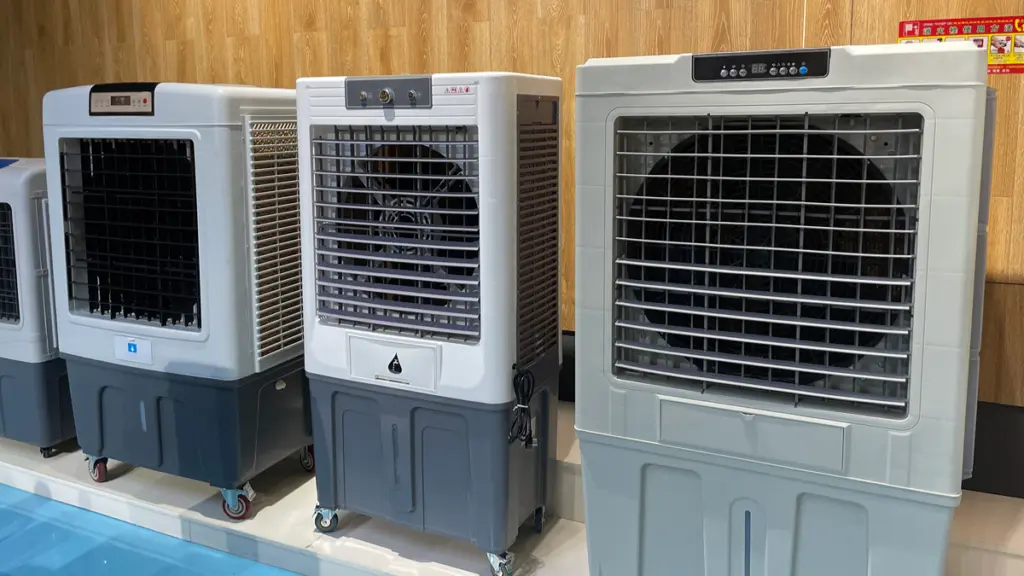
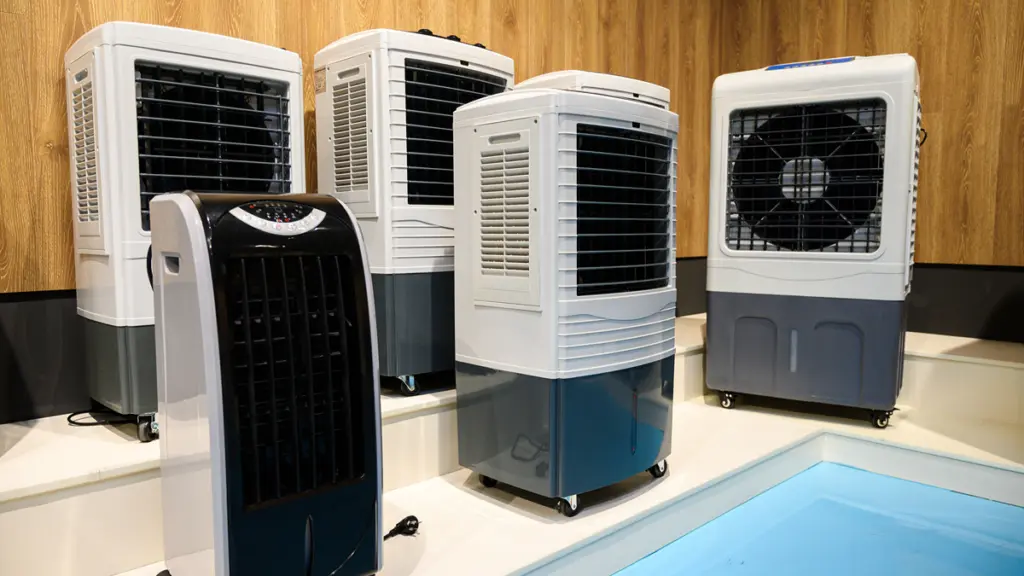
Commercial evaporative air coolers can be categorized based on their installation method and mobility. Different designs are developed for different working environments, from flexible spot cooling to permanent cooling solutions for large facilities.
Portable Commercial Evaporative Air Coolers
Portable commercial evaporative air coolers are designed for flexible cooling applications where the equipment needs to be moved between different areas.
These units usually come with wheels or movable structures, allowing businesses to provide cooling where it is needed without complex installation.
Zu den gängigen Anwendungen gehören::
- Workshops
- Repair areas
- Outdoor commercial spaces
- Temporary working zones
- Localized cooling areas
Portable models are suitable for businesses that need flexible cooling solutions or frequently change their workspace layout.
Fixed and Wall-Mounted Commercial Evaporative Air Coolers
Fixed and wall-mounted evaporative air coolers are installed permanently in specific locations to provide stable airflow for long-term operation.
Compared with portable units, these systems are designed for facilities with fixed layouts and continuous cooling requirements.
Zu den gängigen Anwendungen gehören::
- Fabriken
- Large workshops
- Production areas
- Commercial buildings
Their installation saves floor space and allows businesses to create a more consistent airflow system across large working areas.
Ducted Commercial Evaporative Air Coolers
Ducted evaporative coolers distribute cooled air through connected duct systems, making them suitable for facilities that require wider and more controlled air distribution.
They are commonly used in:
- Large industrial buildings
- Lagerhäuser
- Commercial facilities
This type provides a more integrated cooling solution for projects where airflow distribution needs to be planned together with the building structure.configurations based on installation requirements, product specifications, and market needs.
How to Choose a Commercial Evaporative Air Cooler
Selecting a kommerzieller Verdunstungsluftkühler requires evaluating cooling area, airflow capacity, Energieeffizienz, and operating conditions. These factors help businesses find a suitable cooling solution for different applications.
Consider Cooling Area and Airflow Capacity
The cooling area and airflow capacity determine whether an evaporative cooler can effectively cover the required space. Commercial environments usually have larger areas, higher ceilings, and more heat sources than residential applications.
Important factors include:
| Faktor | Warum es wichtig ist |
|---|---|
| Cooling Area | Determines the required coverage range. |
| Airflow Volume | Affects cooling distribution across the space. |
| Ceiling Height | Higher spaces require stronger airflow. |
| Heat Sources | Machinery and workers can increase cooling demand. |
For large warehouses or production facilities, a high-capacity industrial evaporative air cooler may be required to maintain effective airflow.
Check Power Consumption and Energy Efficiency
Energy efficiency is a key reason businesses use commercial evaporative air coolers for large spaces. Compared with traditional air conditioning systems, these units provide strong airflow while consuming less electricity.
When evaluating efficiency, consider:
- Motor Efficiency: Affects power consumption during long operating hours.
- Fan Design: Influences airflow performance and air distribution.
- Water Pump Performance: Maintains stable water circulation through the cooling pads.
For commercial applications, the total operating cost is often more important than the initial purchase price. A durable and efficient unit can help reduce electricity expenses and maintenance frequency over time.
Select the Right Water Tank Capacity
Water tank capacity affects how long the cooler can operate before refilling is needed. This is especially important for warehouses, Workshops, and outdoor areas that require continuous cooling.
Consider:
- Betriebszeiten: Longer operation requires a more stable water supply.
- Cooling Demand: Higher cooling intensity may increase water consumption.
- Water Supply Conditions: Limited water access may require a larger tank or direct connection.
A reliable water circulation system also helps keep the evaporative air cooler pad evenly wet, improving cooling efficiency and extending component life.
Consider Operating Environment and Product Features
The installation environment affects cooling performance, Wartungsbedarf, and product durability. Businesses should evaluate where the unit will operate before making a purchase decision.
Important considerations include:
- Klimabedingungen: Evaporative cooling performs best in hot and dry environments. For an evaporative air cooler in humid climate, ventilation should be carefully evaluated.
- Installation Location: Drinnen, im Freien, and semi-open spaces may require different designs.
- Operating Time: Long working hours require reliable components for continuous operation.
- Wartungsbedarf: Easy cleaning and durable parts help reduce downtime.
Zum Beispiel, an industrial portable evaporative air cooler can provide flexible cooling in changing work areas, while fixed models are suitable for permanent installations.
How to Maximize Commercial Evaporative Air Cooler Efficiency
Proper usage strategies can help a kommerzieller Verdunstungsluftkühler deliver better cooling performance while reducing unnecessary energy consumption. The operating environment, airflow conditions, and climate factors all affect the final cooling results.
Adjust Airflow Based on Space Layout
The airflow direction and installation position should match the layout of the working area. Large warehouses, Workshops, and production spaces often have different heat sources and airflow patterns, so the cooler should be positioned to distribute cool air where it is needed most.
For open spaces, placing the unit near fresh air entrances can improve air exchange. In areas with concentrated workers or machinery, adjusting the airflow direction toward heat sources can help remove heat more effectively.
Optimize Operation During Different Weather Conditions
Evaporative cooling performance depends on temperature and Luftfeuchtigkeit. In hot and dry climates, the cooler can achieve strong cooling results because water evaporates more efficiently.
In areas with higher humidity, users should improve ventilation and avoid completely enclosed spaces. Increasing fresh air exchange helps remove humid air and allows the evaporative process to continue working effectively.
Manage Water Supply and Cooling Settings
A stable water supply is essential for maintaining cooling performance. Users should ensure the water level is sufficient and the evaporative air cooler pad remains evenly wet during operation.
For different working conditions, businesses can adjust fan speed and cooling modes based on actual needs. Running the cooler at maximum power all the time may not always provide the best efficiency, especially when temperature conditions change.
Keep Airflow Paths Clear During Daily Operation
Objects placed around the cooler can reduce airflow efficiency and limit cooling coverage. Businesses should keep air inlets, outlets, and surrounding areas clear to allow smooth air circulation.
Regular checks of cooling performance, airflow direction, and operating conditions help users identify adjustments needed for better results, especially in large facilities with changing workloads.
How to Choose a Reliable Commercial Evaporative Air Cooler Manufacturer?
A reliable commercial evaporative air cooler manufacturer should provide stable product quality, customization support, and long-term service. Für Händler, Großhändler, and brands, supplier capability directly affects product reliability and business growth.
Evaluate Manufacturing Capability and Quality Control
A manufacturer with strong production capability can provide more stable supply and consistent product performance, especially for bulk orders.
Key factors to evaluate include:
- Production Capacity: Ensure the supplier can handle regular orders and future demand growth.
- Qualitätskontrolle: Check whether the manufacturer has clear inspection procedures for materials, production, and finished products.
- Zertifizierungen: International certifications help verify product safety, quality standards, and compliance with different market requirements.
For global buyers, certifications are especially important because different regions may have specific requirements for electrical safety, Energieeffizienz, and environmental standards. A reliable supplier should be able to provide testing reports and certifications that support smooth market entry.
Yika’s commercial air coolers comply with international standards and support certifications including CE, ERP, CB, ERREICHEN, RoHS, GS, WETTER, UKCA, PSE, KC, and CCC. The factory also has certifications such as ISO9001, ISO14001, BSCI, WCA, SGS, and TUV, supporting quality management and international cooperation.
Check OEM and ODM Customization Capability
For distributors and brands, customization ability is important when developing products for different markets.
A capable manufacturer should support:
- Produktdesign: Customized appearance, structure, and product specifications.
- Function Configuration: Adjustments based on cooling requirements and market preferences.
- Brand Support: Logo printing, packaging design, and customized product solutions.
Strong OEM and ODM capability allows businesses to build differentiated products instead of selling standard models only.
Consider Delivery Capability and After-Sales Support
Supplier reliability also depends on production efficiency and service support after delivery.
Important factors include:
- Stable Lead Time: Consistent production schedules for repeat orders.
- Technische Unterstützung: Assistance with installation, operation, and troubleshooting.
- Parts Availability: Long-term support for maintenance and replacement needs.
For overseas buyers, these services help reduce operational risks and improve customer satisfaction.
Why Choose Yika as Your Commercial Air Cooler Partner?
Runden is an experienced commercial evaporative air cooler manufacturer providing OEM and ODM solutions for distributors, Großhändler, and brands worldwide.
Mit 15+ years of manufacturing experience, strong production capacity, strenge Qualitätskontrolle, and customization support, Yika helps global partners develop reliable cooling products for warehouses, Workshops, Fabriken, and other commercial applications.
Letzte Gedanken
A kommerzieller Verdunstungsluftkühler provides an efficient cooling solution for warehouses, Workshops, Fabriken, and other large spaces that require strong airflow and lower operating costs. Factors such as cooling area, airflow capacity, Energieeffizienz, and product reliability all influence long-term performance.
Partnering with an experienced manufacturer helps businesses access stable supply, OEM/ODM-Anpassung, and professional support. Yika provides reliable evaporative air cooler solutions for global distributors and brands. Contact Yika to discuss your commercial cooling requirements and develop products that match your target market.
Häufig gestellte Fragen
Does redesigning a warehouse layout significantly improve cooling performance?
Ja, redesigning a warehouse layout can significantly improve air-cooling performance. An optimized layout reduces airflow obstructions, shortens air paths, lowers internal heat gains, and aligns storage aisles with how industrial air coolers move and remove heat.
Can evaporative cooling systems handle 24/7 industrial operations?
Evaporative cooling systems are engineered to handle 24/7 industrial operations, provided key factors are managed correctly. These include climate suitability, proper system sizing, consistent water quality, and a proactive maintenance schedule.
How does warehouse ceiling height affect cooling efficiency?
Ceiling height impacts cooling efficiency by increasing the total air volume and promoting thermal stratification, where warm air rises and accumulates near the roof. Taller spaces require more energy to cool and often need destratification systems, like HVLS fans, to push cool air down to the occupied zone.
How can I evaluate if an OEM air cooler supplier is suitable for industrial projects?
To evaluate an OEM supplier for industrial projects, verify their industrial product capabilities, Qualitätskontrollsysteme, compliance certifications, and customization depth. Focus on their ability to consistently meet your project’s specific duty, environment, and delivery schedules, rather than just on price.