Zum Inhalt springen

A PTC ceramic fan heater combines a ceramic heating element with a fan to deliver warm air for indoor spaces. Its PTC technology increases electrical resistance as the element heats up, helping regulate heat output. For buyers, Importeure, and appliance distributors, knowing how this heating system works helps clarify its performance, Sicherheitsfunktionen, and suitability for different heating applications.
This guide explains the main components of a PTC ceramic fan heater, how electricity is converted into warm airflow, and how its self-regulating heating mechanism works. It also compares PTC ceramic technology with traditional resistance-wire heating, helping readers assess key technical differences when evaluating fan heater products and suppliers.
What Is a PTC Ceramic Fan Heater?
The key to this heating technology lies in the relationship between temperature and electrical resistance, which affects how the heater controls its heat output.
PTC stands for Positive Temperature Coefficient, a term that describes how a material’s electrical resistance changes as its temperature rises. In a ceramic fan heater, the PTC element serves as the main heat source, while the fan helps distribute the generated heat through moving air. The term PTC therefore refers to the heating element’s electrical properties rather than the entire appliance.
Unlike traditional metal resistance wires, which generally maintain relatively stable resistance as they heat up, PTC ceramic materials show a much sharper increase in resistance near a specific temperature range known as the Curie temperature. This change creates a self-regulating heating process:
- Temperature Rise: Electrical current passes through the PTC ceramic element, causing its temperature to increase.
- Resistance Increase: As the element approaches its Curie temperature, its electrical resistance rises sharply.
- Power Reduction: Higher resistance reduces the electrical current and heating power, helping limit further temperature increases.
This behavior gives PTC ceramic heaters their self-regulating characteristic. The element adjusts its heat output in response to temperature changes without relying entirely on external controls. Jedoch, self-regulation does not mean the heater can maintain a precise room temperature or prevent every overheating risk. Manufacturers still need to incorporate suitable thermostats and independent safety protection to support stable and safe operation.
What Are the Main Components of a PTC Ceramic Fan Heater?
A PTC ceramic fan heater relies on several components working together to generate heat, move air, and maintain safe operating conditions.
PTC Ceramic Heating Element
The PTC ceramic heating element is the main heat source inside the heater. When electrical current passes through the ceramic material, the element generates heat through electrical resistance. Many designs also use aluminum fins attached to the ceramic heating core. These fins increase the surface area available for heat transfer, allowing moving air to absorb heat more efficiently.
The arrangement of the ceramic elements and aluminum fins affects how the heater transfers heat to the airflow. Manufacturers can adjust the element size, fin structure, and overall layout to meet different heating power and product design requirements.
Fan and Airflow System
The fan moves air through the heater and carries heat from the ceramic element into the surrounding space. It draws cooler air through the intake, pushes it across the heated surfaces, and directs the warmed air through the outlet. This forced-air process helps distribute heat beyond the immediate surface of the heating element.
Airflow design also affects heating performance. Fan speed, blade structure, air intake size, and outlet layout influence how much air passes through the heating assembly and how evenly the heater distributes warm air. A suitable balance between airflow and heating power helps maintain consistent heat delivery during operation.
Thermostat and Safety Protection
Temperature controls and safety devices help a PTC ceramic fan heater operate within its designed limits. Although the PTC element can regulate its own heating power as its temperature changes, additional controls provide greater protection and allow users to adjust the heater’s operation.
Common control and protection features include:
- Thermostat: Monitors the operating or surrounding temperature and controls the heating cycle to maintain the selected temperature range.
- Überhitzungsschutz: Detects excessive internal temperatures and cuts off power to reduce the risk of overheating.
- Kippschutz: Uses a tilt switch or similar sensor to stop the heater if it accidentally falls over. This feature is available only on models designed with tip-over protection.
These components serve different purposes. The thermostat manages temperature, while overheat and tip-over protection respond to specific safety risks. Their availability and design depend on the heater model and its control system.
Explore Reliable PTC Ceramic Fan Heater Solutions
How Does a PTC Ceramic Fan Heater Work?
A PTC ceramic fan heater follows a continuous process that converts electrical energy into warm airflow. Three steps explain how the heating element generates heat, regulates its power, and transfers warmth into the surrounding space.
Schritt 1 – Electricity Heats the PTC Ceramic Element
When the heater connects to a power supply, electric current flows through the PTC ceramic element. The element resists the flow of current and converts electrical energy into heat through electrical resistance. Infolge, its temperature begins to rise.
At a relatively low starting temperature, the PTC element has lower electrical resistance. Under a constant supply voltage, this allows more current to flow and produces a higher initial heating power. The ceramic element then transfers heat to its surrounding surfaces, including the aluminum fins used in many heater designs.
Schritt 2 – Rising Temperature Increases Electrical Resistance
As the PTC ceramic element heats up, its electrical resistance increases. This change becomes much more pronounced near the Curie temperature, where the material’s resistance rises sharply. The higher resistance reduces the current flowing through the element and lowers its electrical power output.
This process creates the self-regulating effect of PTC heating technology. Instead of maintaining the same heating power throughout operation, the element reduces its power as its temperature increases. When the element cools, its resistance can decrease again, allowing the heating power to rise under the same supply conditions.
Schritt 3 – The Fan Distributes Warm Air
While the PTC element generates heat, the fan draws cooler air into the heater and moves it across the heated ceramic surfaces and aluminum fins. As the air passes through the heating assembly, it absorbs thermal energy and becomes warmer before leaving through the air outlet.
The fan continues to circulate air, bringing cooler air toward the heating element and distributing warm air into the surrounding space. Während des Betriebs, the heater gradually reaches a thermal balance when the heat generated by the element matches the heat transferred to the airflow and lost to the surroundings. At this point, the heater operates within a relatively stable temperature range, although its actual output may still change with airflow, ambient temperature, and control settings.
What Are the Advantages of PTC Ceramic Fan Heaters?
PTC ceramic fan heaters offer several practical benefits through their heating technology and compact design, making them suitable for different indoor heating needs.
Fast and Direct Warm Air Delivery
A PTC ceramic heating element works with a fan to provide direct warm airflow shortly after the heater starts. The ceramic element generates heat, while the fan moves air across its heated surfaces and distributes the warmth through the outlet. This combination helps deliver heat directly to nearby areas without waiting for the entire room to warm up.
For users who need local heating, this design can provide a convenient solution for bedrooms, Heimbüros, workstations, and other small indoor spaces. Actual warm-up time and coverage depend on the heater’s power rating, Luftstrom, Zimmergröße, and insulation.
Self-Regulating Heating Performance
PTC technology offers a self-regulating heating characteristic that helps control the element’s power output during operation. As the ceramic element gets hotter, its electrical resistance increases, reducing current flow and limiting further power input under a constant supply voltage.
This response helps reduce the risk of excessive element temperatures compared with heating elements that maintain relatively stable resistance. Jedoch, it does not eliminate overheating risks or replace external temperature controls. A well-designed PTC ceramic fan heater still needs suitable thermostats and independent safety protection.
Compact Design and Multiple Applications
PTC ceramic heating elements can provide substantial heating performance in a relatively compact structure. Their small size makes them easier to integrate into different fan heater designs without requiring large heating assemblies. Manufacturers can combine them with different fan systems, housings, and control panels to develop products for various indoor environments.
Common product formats include:
- Portable Fan Heaters: Compact units designed for moving between rooms or providing personal heating.
- Desktop Fan Heaters: Smaller models suited to desks, workstations, and other limited spaces.
- Tower Ceramic Heaters: Vertical designs that offer a different form factor and can distribute warm air across a wider area, depending on their airflow and oscillation features.
These formats allow appliance brands and distributors to serve different consumer needs while using the same basic PTC heating technology. Product dimensions, heating capacity, Luftstrom, and safety features can vary across models.
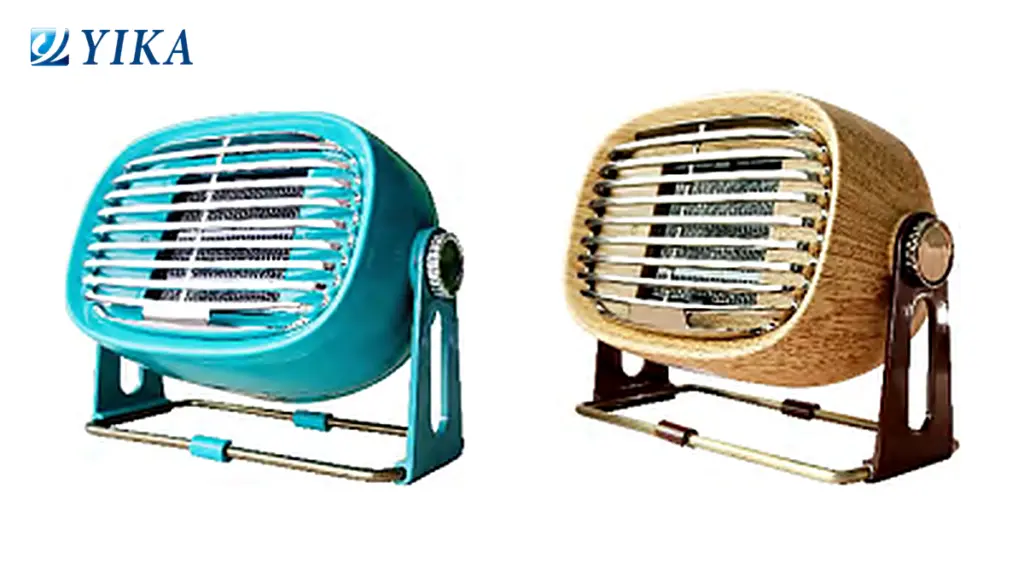
What PTC Ceramic Fan Heater Models Does Yika Offer?
PTC ceramic fan heaters come in different sizes, power ratings, and designs for various indoor heating needs. Yika offers several models, from compact desktop heaters for personal use to larger floor-standing units for room heating.
Compact Desktop PTC Fan Heaters
For personal heating in bedrooms, Heimbüros, und Arbeitsplätze, compact PTC fan heaters offer a space-saving design with practical heating functions. Yika provides several 500W models:
- NQ-MN05 Mini-PTC-Heizlüfter: A compact 500W model with a PTC ceramic heating element, automatic overheat protection, and multiple color options.
- NQ-MN06 Mini PTC-Lüfterheizung: A 500W desktop heater featuring adjustable rotation, an air filter, and overheat protection.
- NQ-MN09 Mini-PTC-Heizlüfter: A compact 500W model with 90-degree adjustment and automatic overheat protection.
Floor-Standing PTC Fan Heater
For users who need higher heating power and wider air distribution, Yika also offers the NQD-22TS PTC-Heizlüfter. This 2,200W floor-standing model features five-speed adjustment, a 12-hour timer, oscillation, temperature settings, and overheat protection. Its design is suitable for larger indoor spaces.
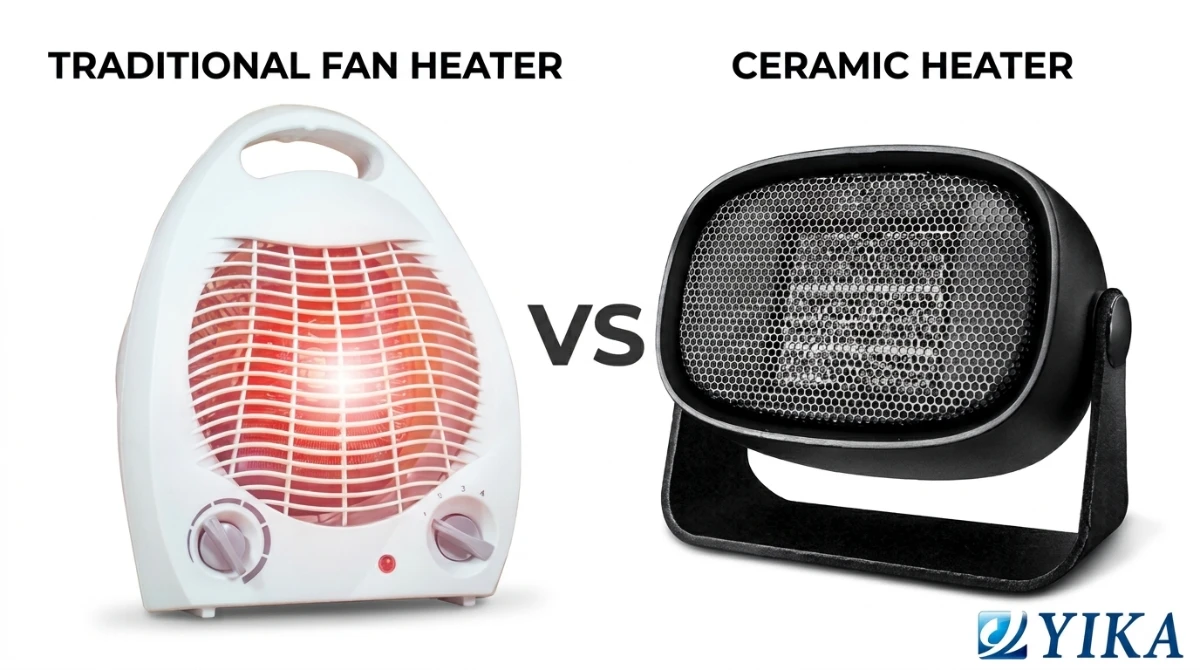
PTC Ceramic Fan Heater vs. Traditional Fan Heater: What’s the Difference?
Both PTC ceramic fan heaters and traditional fan heaters use a fan to distribute warm air, but they differ in the way their heating elements respond to temperature changes. Comparing their heating materials, resistance behavior, and temperature controls helps buyers and appliance distributors identify the key technical differences between the two designs.
| Comparison | PTC Ceramic Fan Heater | Traditional Resistance-Wire Fan Heater |
|---|---|---|
| Heizkörper | PTC ceramic element | Metal resistance heating wire |
| Resistance Behavior | Increases as the element temperature rises, especially near the Curie temperature | Generally remains relatively stable, with some variation as temperature changes |
| Heating Regulation | PTC resistance changes help regulate heating power | Usually relies on thermostats or external controls to regulate heating cycles |
| Luftstrom | Fan-assisted warm air distribution | Fan-assisted warm air distribution |
| Überhitzungsschutz | PTC self-regulation helps limit excessive element temperatures, alongside independent safety devices | Depends on thermostat design and independent overheat protection |
Letzte Gedanken
PTC ceramic fan heaters combine temperature-responsive ceramic heating elements with forced-air circulation to deliver direct, controlled warmth. Their self-regulating heating characteristics, compact structure, and flexible product designs make them suitable for various indoor heating applications. For appliance brands, Importeure, und Distributoren, these technical features provide a useful basis for evaluating different fan heater designs and their intended markets.
Runden offers a range of PTC fan heaters designed for different heating needs and product requirements. Explore our Fan Heater collection to view available models and discuss OEM/ODM options for your product line.
Häufig gestellte Fragen
Is a PTC Ceramic Fan Heater the Same as a Ceramic Fan Heater?
The terms are often used interchangeably because many ceramic fan heaters use PTC heating elements. Jedoch, ceramic fan heater describes the appliance type, while PTC refers to the electrical properties of its heating element. Not every product described as a ceramic fan heater necessarily uses the same PTC design, so buyers should check the heating element specifications.
Does a PTC Ceramic Fan Heater Use Less Electricity Than a Traditional Fan Heater?
Nicht unbedingt. Both PTC ceramic and traditional resistance-wire heaters convert electrical energy into heat. PTC technology reduces its heating power as the element temperature rises, which can help control energy use under certain operating conditions. Jedoch, actual electricity consumption depends on rated power, Betriebszeit, thermostat settings, Raumbedingungen, and the heater’s overall design.
Does a PTC Ceramic Fan Heater Need a Thermostat?
Ja, a thermostat is still useful even though the PTC element can regulate its own heating power. The PTC material responds to its own temperature, while a thermostat helps control the heater according to the desired operating or room temperature. These components serve different purposes and can work together to provide more controlled heating.
What Specifications Should Buyers Check When Sourcing PTC Ceramic Fan Heaters?
Importers and appliance distributors should compare several specifications before placing an order. Key factors include rated power and voltage for the target market, heating capacity and airflow rate, thermostat and temperature control options, product dimensions and housing materials, and available safety features such as overheat and tip-over protection. Buyers should also verify that the product meets the electrical safety and certification requirements of the destination market.
Can Manufacturers Customize PTC Ceramic Fan Heaters for OEM Orders?
Ja. Depending on the manufacturer’s production capabilities, OEM customization may cover heating power, product appearance, Abmessungen, Installationsmethoden, and functional features. Buyers should provide their target market, technical specifications, certification requirements, and expected order quantities when discussing a project. Yika offers OEM and customization services for its fan heater range, including adjustments to power, Aussehen, Größe, Installation, und Funktionen.