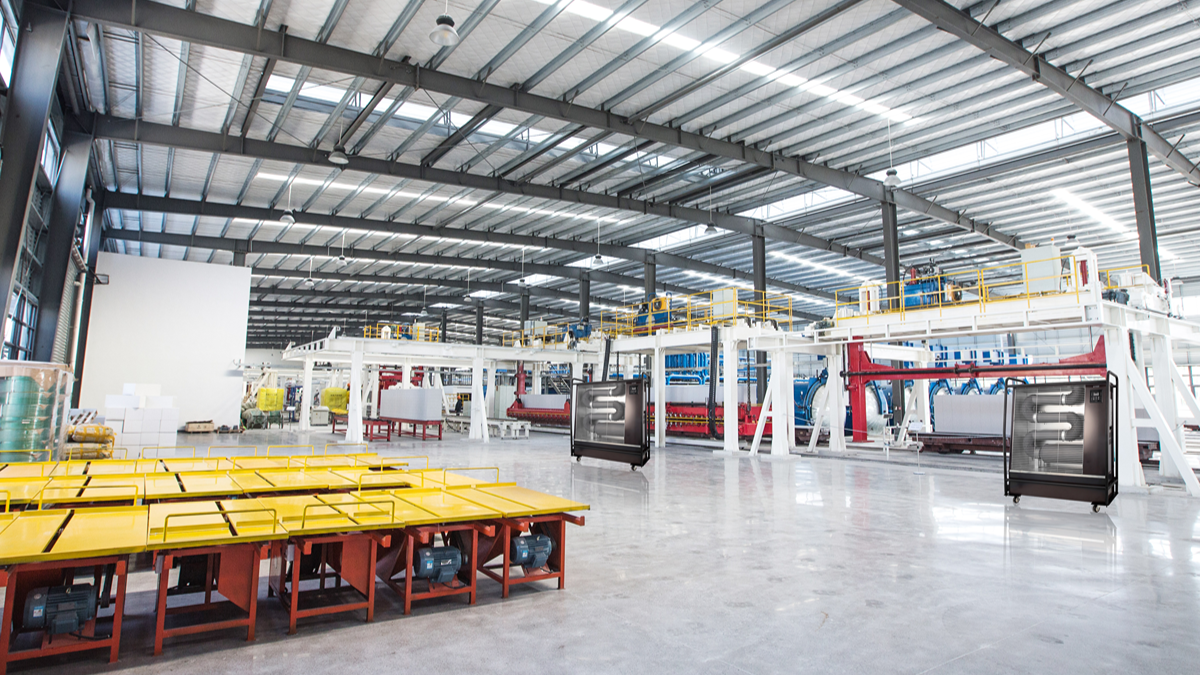
Склады, заводы, and large industrial spaces share a common heating challenge: высокие потолки, плохая изоляция, and vast floor areas that make conventional electric heating impractical or prohibitively expensive. Industrial diesel heaters solve this problem with high power density, portability, and independent operation—no grid connection required. This guide covers the four types of industrial diesel heaters, the specifications B2B buyers must verify, CE/GS certification requirements for EU import, and how to evaluate a Chinese supplier’s portfolio.
Why Industrial Spaces Need Diesel Heating (Not Electric)
Electric heaters work well for offices, торговые помещения, and small workshops. But when you’re heating a 2,000㎡ warehouse with 8-meter ceilings, the math changes dramatically.
Power density limitation. Electric heaters max out at around 3-5 kW per unit. To heat a large industrial space, you’d need dozens of units, each drawing significant current. Most warehouses aren’t wired for that load. Upgrading the electrical infrastructure can cost €15,000-€40,000 before you buy a single heater.
Running cost at scale. Industrial electricity rates in the EU average €0.15-€0.25 per kWh. А 100 kW electric heating system running 8 hours per day costs €120-€200 daily. Дизель, by contrast, delivers about 10 kWh per liter. At €1.20-€1.50 per liter (bulk industrial rates), the same 100 kW output costs €96-€120 per 8-hour shift—20-40% cheaper, and the gap widens when you factor in demand charges.
Portability and deployment speed. Diesel heaters are self-contained. Roll them into a new construction site, a temporary storage tent, or a greenhouse extension, plug in a fuel tank, and you have heat within minutes. Electric heaters require fixed wiring, circuit protection, and often a three-phase supply.
Where diesel heating makes sense:
- Warehouses and distribution centers with high ceilings (6-12 метры)
- Manufacturing floors where process heat is also needed
- Construction sites and temporary structures
- Agricultural buildings: greenhouses, livestock barns, grain drying
- Event venues and large tents
- Backup heating during grid outages or peak-demand curtailment
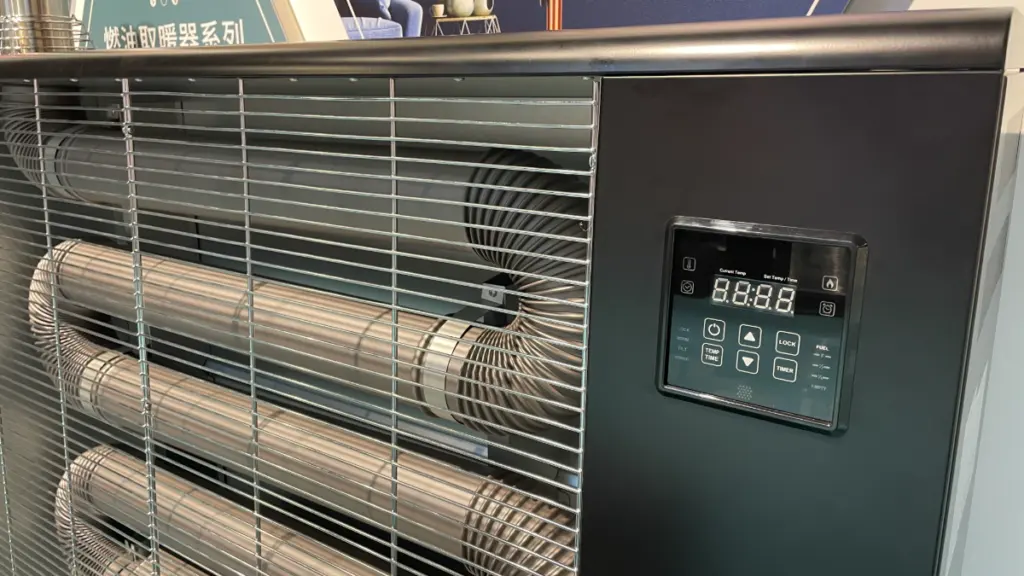
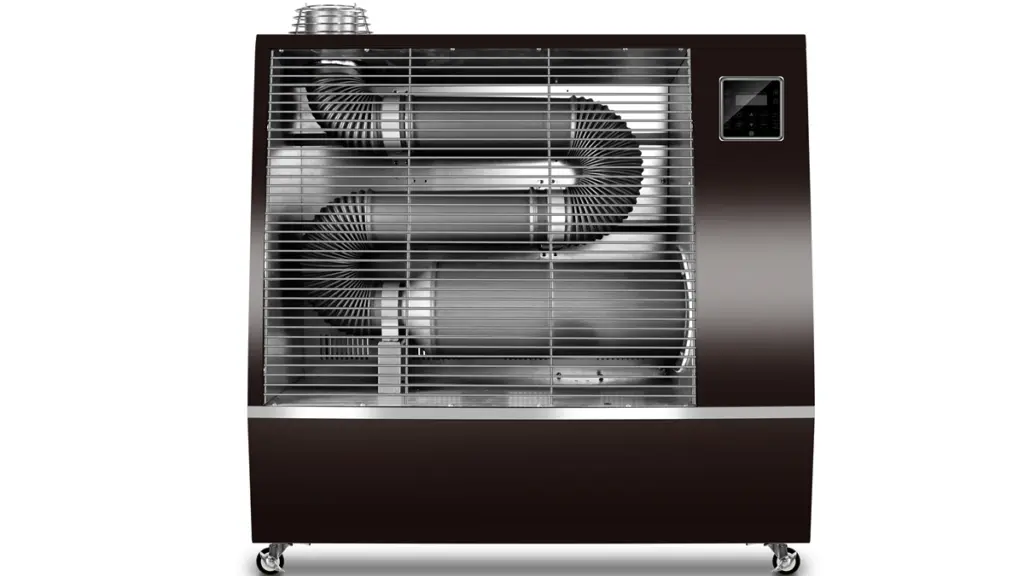
Types of Industrial Diesel Heaters: Infrared vs Forced Air
Not all diesel heaters work the same way. The heating mechanism determines where and how you should deploy them.
Инфракрасный (Сияющий) Diesel Heaters
Infrared heaters burn diesel to heat a ceramic or metal surface, which then emits radiant energy. That energy travels through the air without heating it and warms solid objects—floors, machinery, people—directly. Think of it like standing in sunlight on a cold day: the air is chilly, but you feel warm.
Возможно, вас заинтересует: Как работает инфракрасный дизельный обогреватель?
Лучшее для: High-ceiling spaces (8+ метры), drafty environments, spot heating in large areas, outdoor or semi-outdoor applications.
Преимущества: No air movement (doesn’t stir dust), silent operation, energy-efficient for occupied zones, works in open or poorly sealed buildings.
Limitations: Heats objects, not air—so the ambient temperature stays lower. Not ideal for spaces that need uniform air temperature (например, paint booths, chemical storage).
Forced Air (Конвекция) Diesel Heaters
Forced air heaters burn diesel to heat a heat exchanger, then use a fan to blow air across it and distribute warm air throughout the space. This is the “печь” подход: heat the air, and the air heats everything else.
Лучшее для: Enclosed or well-sealed spaces, areas requiring uniform air temperature, workshops with lower ceilings (3-6 метры), spaces where people move around frequently.
Преимущества: Rapid temperature rise, uniform heat distribution, can be ducted to multiple zones, thermostat-controlled for consistent comfort.
Limitations: Fan noise (60-75 dB typical), air movement stirs dust and fumes, requires reasonable building envelope (otherwise you’re heating the outdoors), combustion byproducts must be vented.
Hybrid and Specialty Units
Some manufacturers offer hybrid units that combine radiant and convection heating, or specialty designs like outdoor diesel heaters (weather-resistant enclosures, IP44+ rating) и agricultural heaters (коррозионностойкие материалы, high-humidity tolerance).
| Тип нагревателя | Heating Mechanism | Best Ceiling Height | Уровень шума | Типичное применение |
|---|---|---|---|---|
| Инфракрасный (Сияющий) | Radiant surface heats objects directly | 6-12+ метры | Тихий (не фанат) | High-bay warehouses, мероприятия на открытом воздухе, drafty buildings |
| Forced Air (Конвекция) | Fan blows air across heat exchanger | 3-6 метры | 60-75 дБ (шум вентилятора) | Enclosed workshops, заводы, uniform temperature needs |
| Гибридный / Specialty | Combined radiant + конвекция | Varies | От низкого до умеренного | Greenhouses, livestock barns, multi-zone buildings |
Find the Right Diesel Heater for Your Factory or Warehouse
Key Specifications Buyers Must Verify
When evaluating industrial diesel heaters, focus on these six specifications. They determine whether a unit will actually heat your space effectively and safely.
1. Выходная мощность (kW or BTU/h)
This is the heater’s capacity, not its fuel consumption. Match it to your space volume and insulation quality. A rough rule of thumb for moderately insulated industrial buildings: 0.08-0.12 kW per cubic meter. A 1,000㎡ warehouse with 6-meter ceilings (6,000 m³) needs 480-720 kW total, typically delivered by 3-5 units of 150-200 kW each.
2. Fuel Consumption (л/ч)
At full load, diesel heaters consume roughly 0.1 L/h per kW of output. А 100 kW unit burns about 10 л/ч. Verify the manufacturer’s stated consumption at both 100% и 50% load—some units are less efficient at partial load.
3. Зона покрытия (㎡)
Manufacturers often state a “recommended coverage area,” but this assumes specific ceiling heights and insulation levels. Always ask: “At what ceiling height and insulation R-value does this coverage apply?” A heater rated for 500㎡ at 3 meters may only cover 250㎡ at 8 метры.
4. Уровень шума (дБ)
Forced air heaters generate fan noise (60-75 dB typical). Infrared units are silent. If noise matters (например, workshops with communication needs, livestock barns where animals stress easily), specify a maximum dB level in your RFQ.
5. Safety Certifications (CE / GS / UKCA)
For EU import, CE marking is mandatory. GS (Geprüfte Sicherheit) is a voluntary German safety certification that signals higher build quality. UKCA is required for the UK market post-Brexit.
6. Ventilation and Exhaust Requirements
Combustion produces CO₂, CO, NOₓ, and water vapor. Forced air units must be vented or used in well-ventilated spaces. Infrared units produce less exhaust but still require airflow. Ask for the manufacturer’s ventilation specification (m³/h fresh air per kW of output).
| Спецификация | What to Ask | Red Flag |
|---|---|---|
| Выходная мощность | “What is the rated kW at 100% и 50% load?” | Only states BTU, no kW; or kW varies >15% between loads |
| Fuel Consumption | “What is L/h at full load? At half load?” | No partial-load data; or consumption >0.12 L/h per kW |
| Зона покрытия | “At what ceiling height and R-value does this apply?” | Vague “up to X ㎡” with no conditions |
| Уровень шума | “What is dB at 1 метр? В 5 метры?” | No dB spec; или >80 dB without warning |
| Сертификаты | “Can you provide CE/GS certificate PDFs with serial numbers?” | Claims “CE approved” but no certificate; or certificate expired |
| Вентиляция | “What is the required fresh air intake (m³/h per kW)?” | No ventilation spec; или “no ventilation needed” claim |
CE & GS Certification for EU Import
Importing industrial diesel heaters into the EU requires CE marking under multiple directives. The exact stack depends on the heater type, but most units fall under:
- Machinery Directive 2006/42/EC — if the heater has moving parts (фанаты, насосы, automatic ignition)
- Low Voltage Directive 2014/35/EU — if the heater has electrical components (элементы управления, ignition, фанаты)
- EMC Directive 2014/30/EU — electromagnetic compatibility for electronic controls
- Gas Appliances Regulation 2016/426 — if the heater can also run on LPG/natural gas (dual-fuel units)
- Ecodesign Directive 2009/125/EC — energy efficiency requirements (applies to space heaters <400 кВт)
- RoHS 2011/65/EU and REACH 1907/2006 — hazardous substance restrictions
GS certification (Geprüfte Sicherheit, “Tested Safety”) is a voluntary German mark administered by TÜV, VDE, or other accredited bodies. It signals that the product has undergone type-testing beyond CE self-declaration requirements. Many EU distributors prefer or require GS marking for liability reasons.
UKCA marking replaced CE for the UK market post-Brexit. The technical requirements are largely identical, but the conformity assessment must be done by a UK Approved Body (not an EU Notified Body). UK government guidance on UKCA marking covers the transition timeline and acceptance rules.
How to verify a supplier’s certification claims:
- Request the full certificate PDF (not a photo or screenshot)
- Check the Notified Body number against NANDO (EU Notified Bodies database)
- Verify the certificate covers the exact model numbers you’re importing
- Check the certificate expiry date (most are valid 5 годы, but require annual surveillance audits)
- Ask for the Declaration of Conformity (DoC) and technical file summary
- Request test reports (EN 60335-1 for electrical safety, EN 1596 for gas heaters, и т. д.)
Learn more about YIKA’s quality control process →
The Bottom Line for Industrial Buyers
Industrial diesel heaters are the right choice when you need high-power, портативный, grid-independent heating for large spaces. The four key decisions are:
- Тип: Infrared for high ceilings and drafty spaces; forced air for enclosed areas needing uniform temperature
- Власть: Match kW output to your space volume (0.08-0.12 kW/m³ rule of thumb)
- Сертификация: CE + GS for EU, UKCA for UK; always request certificate PDFs and verify Notified Body numbers
- Supplier: Choose a manufacturer with in-house testing, full certification portfolio, and OEM capability—not a trading company reselling unbranded units
Заключительные мысли
The right industrial diesel heater can make a significant difference in maintaining a comfortable, productive, and safe working environment in warehouses and factories. Heating capacity, fuel efficiency, требования к установке, and operating conditions all need to match your facility’s specific needs.
С более чем 15 years of experience in heating equipment manufacturing, КРУГЛЫЙ provides industrial diesel heater solutions for warehouses, заводы, семинары, and other industrial spaces, с OEM customization to meet different project requirements. Explore our infrared diesel heater range to find a practical heating solution for your business.
Часто задаваемые вопросы
What size diesel heater do I need for a 1,000㎡ warehouse?
For a 1,000㎡ warehouse with 6-meter ceilings (6,000 m³ volume) and moderate insulation, you need 480-720 kW total output. This typically means 3-5 units of 150-200 kW each, или 6-8 units of 80-100 kW for more uniform heat distribution. The exact number depends on your insulation R-value, door opening frequency, and desired indoor temperature. Send us your floor plan and we’ll provide a free heating calculation within 24 часы.
Are industrial diesel heaters safe for enclosed spaces?
Да, when properly specified and vented. Combustion produces CO₂, CO, NOₓ, and water vapor. Forced air units must be vented to the outdoors or used in spaces with adequate fresh air intake (обычно 10-15 m³/h per kW of output). Infrared units produce less exhaust but still require airflow. All YIKA heaters include oxygen depletion sensors (ODS) and tip-over switches as standard. Never use an unvented diesel heater in a sealed space without calculating fresh air requirements.
What certifications are required for EU import?
CE marking is mandatory, covering Machinery Directive 2006/42/EC, Low Voltage Directive 2014/35/EU, EMC Directive 2014/30/EU, and Ecodesign Directive 2009/125/EC (for units <400 кВт). GS certification is voluntary but preferred by many EU distributors. For the UK market, UKCA marking is required post-Brexit. All YIKA diesel heaters carry CE and GS as standard, with UKCA available for UK-bound shipments. We provide full certificate PDFs, Declarations of Conformity, and test reports with every order.
How much diesel does an industrial heater consume per hour?
At full load, diesel heaters consume approximately 0.1 L/h per kW of output. А 100 kW unit burns about 10 л/ч; а 200 kW unit burns about 20 л/ч. В 50% load (thermostat cycling), consumption drops to roughly 60-70% of full-load rate, not 50%, because ignition and fan power remain constant. For a 500 kW installation running 8 hours/day at 70% average load, expect about 280 L/day or 2,000 L/week.
Can I use an industrial diesel heater in a greenhouse?
Да, but you need a unit designed for high-humidity environments. Greenhouses operate at 70-95% relative humidity, which accelerates corrosion in standard heaters. YIKA’s AH Series features stainless steel heat exchangers, powder-coated enclosures, and sealed electrical compartments rated for continuous high-humidity operation. CO₂ enrichment from combustion can actually benefit plant growth, but you must monitor levels to stay below 2,000 ppm for worker safety. Ventilation requirements are stricter in greenhouses—budget 15-20 m³/h fresh air per kW.
What is the MOQ for YIKA industrial diesel heaters?
MOQ varies by series and customization level. Standard models (THE/THG/OBH/AH) typically start at 50-100 units per model. OEM orders with custom branding, voltage, or plug type start at 200 единицы. For trial orders or mixed-model shipments, we can accommodate 20-30 units total across multiple models. Contact us with your target models and quantities for an exact MOQ and lead time quote.
Do you offer OEM/customization for diesel heaters?
Да. YIKA offers OEM and ODM services for all four diesel heater series. Customization options include: your logo and brand colors on the enclosure, custom voltage/frequency (110V/220V/380V, 50Гц/60 Гц), region-specific plugs (EU/UK/US/AU), custom thermostat setpoints, packaging with your brand, and user manuals in your language. ODM projects (custom engineering) start at 500 units and include mold modifications, control board firmware, and certification support. Lead time for OEM orders is 25-35 дни; ODM projects are 60-90 дни.
Next steps: